
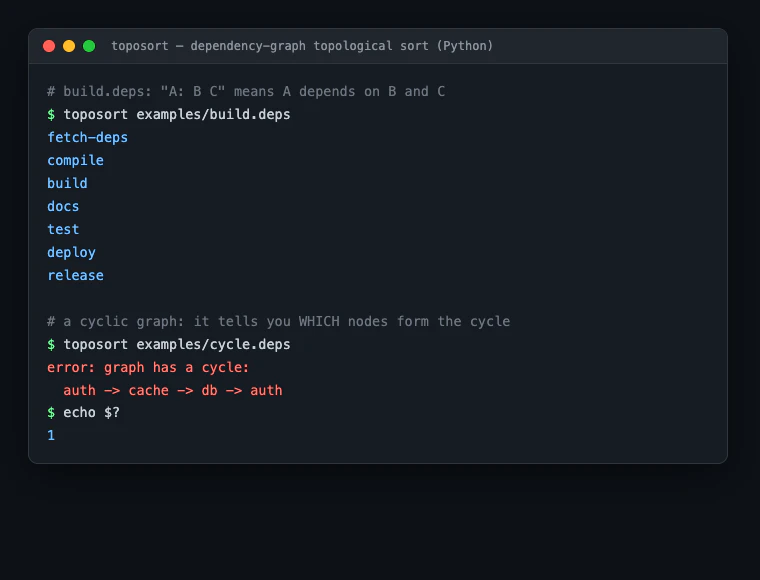
makeのターゲットや npm の依存、タスクの前後関係——「A の前に B と C を済ませる」という依存グラフを正しい順序に並べるのがトポロジカルソート。それを CLI にした。実装の hinge は 2 つ: (1) Kahn のアルゴリズム (入次数 + キュー) で、しかも出力を安定 (辞書順) にする、(2) 循環があったとき「循環がある」で終わらせず、DFS で『どのノードがサイクルを作っているか』をauth -> cache -> db -> authの形で名指しする。前 2 回が Rust / Go だったので、今回は Python の CLI で。
📦 GitHub: https://github.com/sen-ltd/topo-sort-cli
(CLI なのでライブデモは無し。python3 main.py か Docker で動かせます。)
入力フォーマット
1 行 1 宣言。A: B C は「A は B と C に依存する」(B・C が先)。# コメントと空行は無視:
deploy: build test
build: compile
test: compile
compile:
内部では「前提 → それを必要とするもの」の辺として持つ。A: B なら辺 B -> A。こうすると prerequisites-first のトポロジカルソートがそのままビルド順になる。
hinge 1: Kahn 法 + 安定な出力
トポロジカルソートには大きく DFS 版と Kahn 版がある。Kahn 法は直感的で、入次数 (in-degree, そのノードが依存している前提の数) が 0 のものから順に取り出す:
- 各ノードの入次数を数える
- 入次数 0 のノード (前提なし = 最初に置ける) をキューに入れる
- キューから 1 つ取り出して出力、その「依存先」の入次数を 1 減らす
- 0 になったらキューに追加。繰り返す
素朴に実装するとキューの取り出し順が不定で、出力がブレる。heapq (最小ヒープ) で「準備できたノードのうち辞書順最小」を常に取ることで、同じ入力には常に同じ出力を返す:
import heapq

def topo_sort(g):
    indeg = g.indegrees()
    ready = [n for n, d in indeg.items() if d == 0]
    heapq.heapify(ready)                       # 準備完了ノードを最小ヒープに

    order = []
    while ready:
        n = heapq.heappop(ready)               # 辞書順最小 → 安定な順序
        order.append(n)
        for v in sorted(g.adj[n]):
            indeg[v] -= 1
            if indeg[v] == 0:
                heapq.heappush(ready, v)

    if len(order) == len(g.nodes):
        return SortResult(order=order, cycle=None)
    return SortResult(order=None, cycle=_find_cycle(g))  # 全部出せない = 循環
最後の len(order) != len(g.nodes) が肝。入次数が 0 にならないノードが残る = 循環があることの判定そのもの。CI のテストで安定性を固定:
def test_deterministic_tiebreak():
    # 独立した 3 ノード → 辞書順
    assert order_of("b:\na:\nc:\n") == ["a", "b", "c"]
hinge 2: サイクルを「名指し」する
Kahn 法は「循環がある」ことは分かるが、どこにあるかは教えてくれない。error: cycle detected だけ出すツールは多いが、それだと利用者は自分でグラフを睨むはめになる。
そこで 2 パス目に DFS の 3 色塗り分け (white / gray / black) で具体的なサイクルを 1 本取り出す:
- white = 未訪問、gray = 現在の再帰スタック上、black = 訪問完了
- DFS 中に gray のノードに再到達 = 後退辺 (back-edge) = 循環
- そのとき再帰スタックの「該当ノードから先」がサイクルそのもの
def _find_cycle(g):
    WHITE, GRAY, BLACK = 0, 1, 2
    color = {n: WHITE for n in g.nodes}
    stack = []

    def dfs(u):
        color[u] = GRAY
        stack.append(u)
        for v in sorted(g.adj[u]):
            if color[v] == GRAY:               # 後退辺を発見 → サイクル
                idx = stack.index(v)
                return stack[idx:] + [v]       # スタックの該当区間 + 戻り先
            if color[v] == WHITE:
                found = dfs(v)
                if found is not None:
                    return found
        stack.pop()
        color[u] = BLACK
        return None

    for n in sorted(g.nodes):
        if color[n] == WHITE:
            found = dfs(n)
            if found is not None:
                return found
    return []
これで「循環があります」ではなく:
error: graph has a cycle:
  auth -> cache -> db -> auth
と実際の循環経路を出せる。利用者はこの 3 ノードの依存だけ直せばいい。終了コードも 1 にして、シェルスクリプトから検知可能にする。
サイクルが「無実の枝」の裏に隠れていても見つける
DFS は全ノードを起点に回すので、循環と無関係な部分グラフがあっても循環を取り逃さない。テストで固定:
def test_cycle_with_innocent_tail():
    # x -> y は健全。a <-> b が循環。それでも検出できること
    res = topo_sort(parse_graph("x: y\ny:\na: b\nb: a\n"))
    assert res.order is None
    assert set(res.cycle) <= {"a", "b"}
    assert res.cycle[0] == res.cycle[-1]   # 経路は始点に戻る
自己ループ (a: a)、2 ノード循環、3 ノード循環もそれぞれテスト。
CLI
# file 引数があれば読む、無ければ stdin
text = open(args.file).read() if args.file else sys.stdin.read()
graph = parse_graph(text)
result = topo_sort(graph)
if result.cycle is not None:
    print("error: graph has a cycle:", file=sys.stderr)
    print("  " + " -> ".join(result.cycle), file=sys.stderr)
    return 1
for node in (reversed(result.order) if args.reverse else result.order):
    print(node)
return 0
--reverse で依存先優先、--numbered で番号付き。stdin 対応なので cat deps.txt | toposort もできる。
設計
src/graph.py — parse + Kahn 法 + DFS サイクル抽出 (標準ライブラリのみ)
src/cli.py   — argparse、file/stdin、終了コード
main.py      — エントリポイント
外部依存ゼロ。テスト 21 個 (pytest): パース、順序の妥当性、辞書順安定、自己ループ・2/3 ノード循環、無実の枝に隠れた循環。Docker は python:3.12-alpine ビルド → alpine ランタイム、非 root。
動かす
python3 main.py examples/build.deps
python3 -m pytest          # 21 tests
docker build -t toposort . && docker run --rm -i toposort < examples/build.deps
まとめ
- トポロジカルソートの Kahn 法は「入次数 0 から取り出す」。
heapqで辞書順最小を取れば出力が安定する。 -
len(order) != ノード数が循環の検出条件そのもの。 - 「循環がある」で終わらせず、DFS の gray ノード再到達で実際のサイクル経路を名指しする (
auth -> cache -> db -> auth)。 - DFS は全ノードを起点に回すので、無関係な枝の裏に隠れた循環も拾える。
- 終了コードを分ける (正常 0 / 循環 1) とシェルから使える。
これは SEN 合同会社の OSS ポートフォリオ #268 です。https://sen.ltd/portfolio/