
A conventional data center may support Bitcoin mining, but available floor space and a large power connection are not enough to establish suitability. The exact miners must fit the site's electrical distribution, cooling, physical layout, operating rules, and commercial terms. Retrofitting can be feasible in one facility and uneconomic in another.
The right starting point is a compatibility review of the actual proposed equipment. Treat the existing building as a set of resources and constraints, then compare the cost of adapting it with the mining operation it could realistically support.
Compare the workload with the building's original purpose
A conventional data center may have been designed for servers hosting applications, storage, or customer workloads. Its features can include redundant power, controlled environments, network services, and contractual availability commitments. Those features have value, but their cost may not align with a mining business's economics.
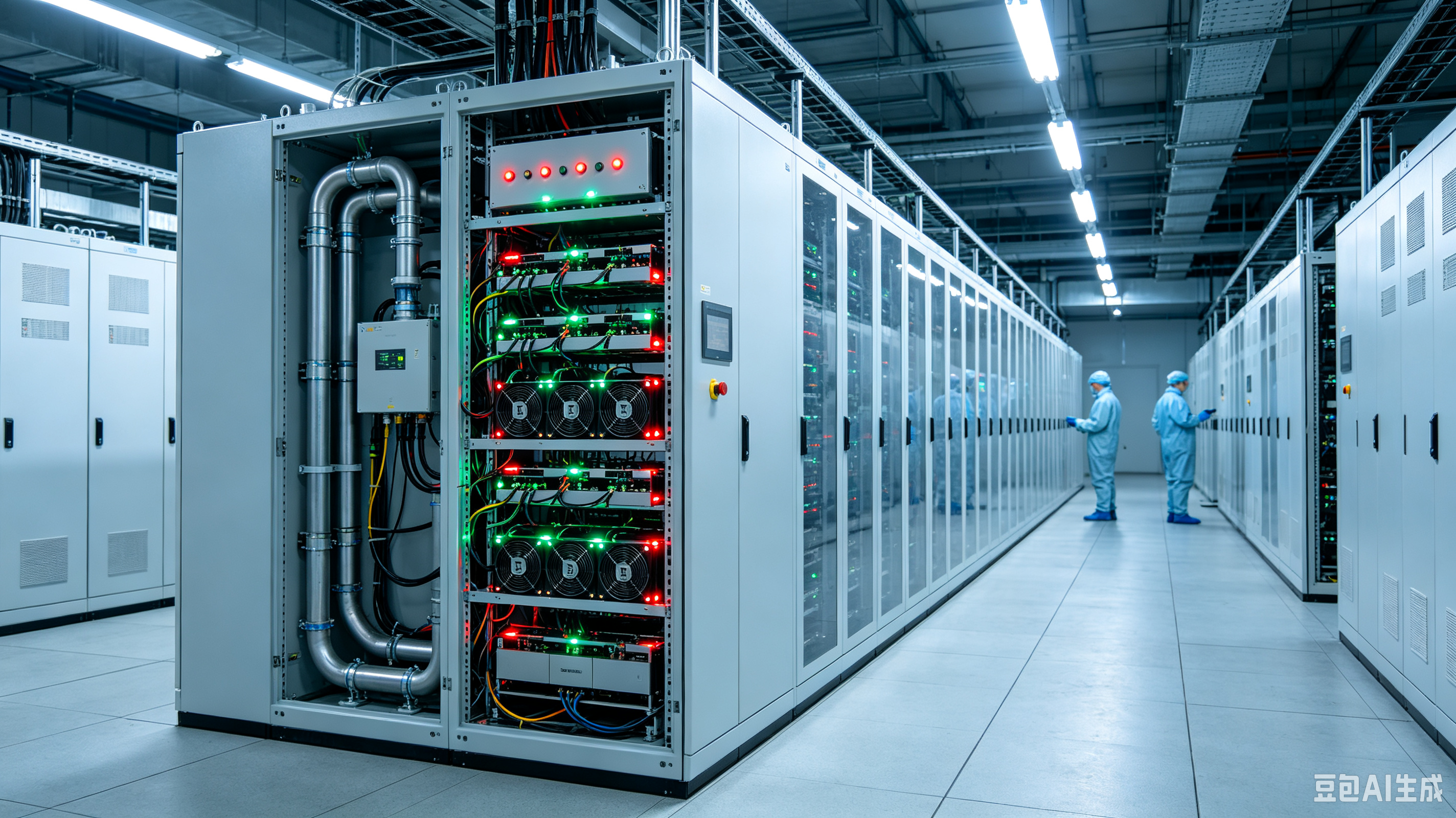 ![Something went wrong]()Bitcoin mining focuses on repeated hashing work performed by specialized equipment. The hardware can have different dimensions, airflow patterns, power connections, and noise characteristics from the servers a facility normally accepts. A spare rack position is therefore not automatically a compatible mining position.
Start with a small equipment schedule listing the exact variant, power requirements, cooling method, and service clearances. This turns a general question about mining into a concrete review that facility engineers and the operator can assess.
Check the path from the utility to each machine
An advertised megawatt figure describes only part of the power question. Determine how much usable capacity remains after existing loads and reserved margins, then examine how that capacity is distributed to the proposed space. A site can have spare capacity overall while a particular room or circuit cannot support the load.
Equipment voltage and connection requirements must match. For instance, the manufacturer's S21 Pro specification identifies supply and operating requirements for that model. Those requirements cannot be assumed for another miner or satisfied merely because a facility supports high-density computing in general.
Have qualified professionals evaluate any changes to distribution, protection, wiring, and isolation. Include installation cost and downtime in the comparison. Existing infrastructure is useful only when it can serve the proposed equipment safely and within the facility's operating constraints.
Cooling capacity must reach the actual intake
An aggregate cooling rating does not prove that heat will be removed effectively from every miner. Air must reach the intake, pass through the equipment as intended, and leave without excessive recirculation. Rack layouts and containment designed for another airflow pattern may need modification.
For an illustration, assume a room can deliver 200 kilowatts of usable electrical capacity and each proposed miner draws 4 kilowatts. The simple division suggests 50 machines. If the available cooling arrangement can serve only 160 kilowatts of that equipment load, the effective limit becomes 40 before other constraints are considered.
This is a hypothetical capacity example, not a design allowance. The actual limit must incorporate the complete installation and its operating conditions. It demonstrates why the lowest relevant capacity, rather than the most impressive headline figure, controls deployment.
The Department of Energy's discussion of data-center efficiency principles emphasizes coordination between equipment, electrical systems, and cooling. Reuse of an existing facility still requires that coordination; a previously successful server installation does not validate a different load automatically.
Examine the commercial rules as carefully as the hardware
Read the facility agreement for permitted equipment, power billing, access, maintenance, noise, and shutdown conditions. A colocation provider may price space and power in a way that is reasonable for application hosting but difficult for a low-margin mining operation.
As an illustrative comparison, an all-in $0.16 energy-equivalent cost on a 100-kilowatt continuous load produces $384 per day of cost. At $0.08, the same load produces $192 per day. This simplified calculation excludes other charges and says nothing about current market offers; it shows how a rate difference scales with continuous use.
Compare the complete contract rather than selecting the lowest energy line. Minimum commitments, installation fees, metering boundaries, service charges, and equipment-removal terms can change the result. Identify who bears losses during outages and who can authorize a controlled interruption.
Use a pilot to test the conversion assumptions
Understanding how mining requirements differ from other data centers helps frame the technical review, but measured operation supplies the evidence. A limited pilot can reveal temperature hotspots, power behavior, network interruptions, maintenance access problems, and differences between local hash rate and accepted pool work.
Define acceptance criteria before the pilot begins. Record the proposed operating conditions and what would require redesign or a decision not to proceed. A successful brief test under mild weather is weaker evidence than operation evaluated against the intended environmental range.
The final decision should combine engineering compatibility with operating cost. A conventional data center is a possible host for mining, not a ready-made guarantee of profitability. Proceed when the facility can support the exact equipment, the contract permits the intended operation, and the measured results justify the cost of adaptation.