
Introduction
In the modern digital landscape, businesses are constantly seeking faster and more efficient ways to build applications. Traditional development methods often struggle to keep up with the growing demand for speed, scalability, and flexibility. This is where outsystems architecture becomes a powerful solution.
Understanding outsystems architecture is essential for organizations looking to streamline development processes while maintaining high performance. Built on a low-code platform, it enables rapid application development without compromising quality. As companies accelerate their digital transformation journeys, outsystems architecture plays a crucial role in delivering scalable and reliable enterprise solutions.
The ability to quickly design, deploy, and manage applications makes this architecture a preferred choice for businesses aiming to stay competitive in an ever-evolving market.
Understanding Outsystems Architecture
At its core, outsystems architecture is designed to simplify the development of complex applications through a visual, model-driven approach. It combines front-end and back-end development into a unified platform, allowing teams to work more efficiently.
The architecture is structured to support rapid development cycles while ensuring consistency and scalability. By using pre-built components and reusable modules, outsystems architecture reduces development time and minimizes errors.
This approach allows developers to focus on innovation rather than repetitive coding tasks. As a result, organizations can deliver applications faster and adapt to changing business needs with ease.
Core Components of Outsystems Architecture
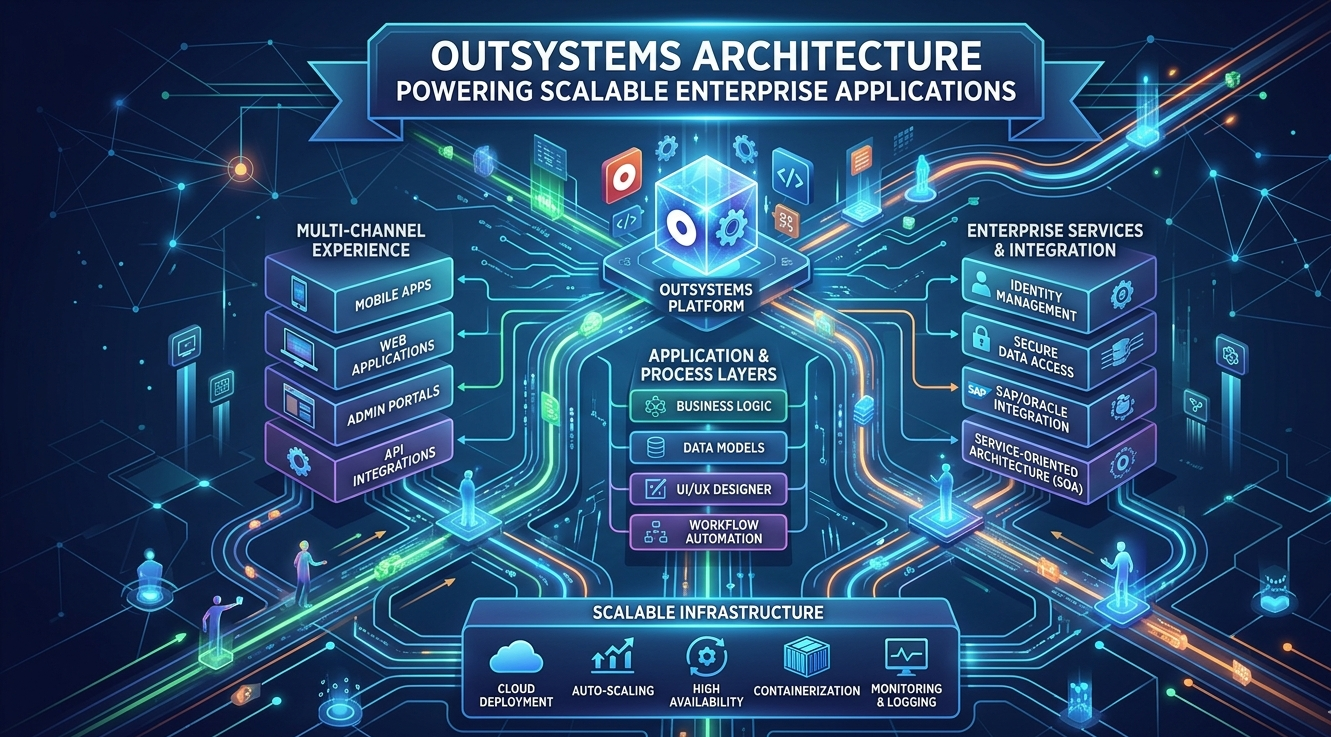
The strength of outsystems architecture lies in its well-defined components that work together seamlessly. These include the presentation layer, application logic, and data management systems.
The presentation layer focuses on user interfaces, ensuring that applications are visually appealing and user-friendly. The application logic layer handles business processes and workflows, enabling efficient operations.
Data management is another critical aspect of outsystems architecture, ensuring that information is stored, retrieved, and processed efficiently. Together, these components create a robust framework for building modern applications.
Benefits of Using Outsystems Architecture
Organizations adopting outsystems architecture experience numerous benefits. One of the most significant advantages is speed. The low-code approach allows developers to build applications much faster compared to traditional methods.
Scalability is another key benefit. Applications built using outsystems architecture can easily handle increasing workloads and user demands. This makes it ideal for growing businesses.
Additionally, the architecture enhances collaboration between teams. Developers, designers, and business stakeholders can work together more effectively, resulting in better outcomes. These benefits make outsystems architecture a valuable asset for modern enterprises.
How Outsystems Architecture Supports Digital Transformation
Digital transformation requires organizations to innovate quickly and adapt to changing market conditions. outsystems architecture provides the tools and flexibility needed to achieve this.
By enabling rapid development and deployment, it allows businesses to launch new applications and features without delays. This agility is essential in today’s competitive environment.
Furthermore, outsystems architecture supports integration with existing systems, ensuring a smooth transition to modern technologies. This makes it easier for organizations to modernize their operations and stay ahead of the competition.
Security and Compliance in Outsystems Architecture
Security is a critical concern for any application, and outsystems architecture addresses this through built-in features and best practices. The platform includes security mechanisms that protect data and ensure safe operations.
Compliance with industry standards is also a key aspect of outsystems architecture. Organizations can implement policies and controls to meet regulatory requirements.
By prioritizing security and compliance, outsystems architecture helps businesses build trust with their users and maintain the integrity of their applications.
Challenges in Implementing Outsystems Architecture
While outsystems architecture offers many advantages, it also comes with certain challenges. One of the main issues is the learning curve for teams new to low-code platforms.
Another challenge is managing large-scale applications. As projects grow, maintaining structure and organization becomes more complex.
Despite these challenges, proper planning and training can help organizations fully leverage outsystems architecture. With the right approach, businesses can overcome these obstacles and achieve successful implementation.
Future Trends in Outsystems Architecture
The future of outsystems architecture is shaped by advancements in technology and evolving business needs. Artificial intelligence and automation are expected to play a significant role in enhancing development processes.
These technologies will enable smarter applications and more efficient workflows. Additionally, cloud computing will continue to support scalability and flexibility.
As these trends evolve, outsystems architecture will become even more powerful, enabling organizations to build innovative solutions that meet the demands of the digital age.
Importance of Scalability in Outsystems Architecture
Scalability is a defining feature of outsystems architecture. Applications must be able to handle growth without compromising performance.
The architecture is designed to support high volumes of data and users, ensuring consistent performance under varying conditions. This makes it suitable for enterprises with dynamic requirements.
By focusing on scalability, outsystems architecture ensures that applications remain reliable and efficient as businesses expand.
Conclusion
In today’s fast-paced digital environment, outsystems architecture provides a practical and efficient solution for application development. Its low-code approach, combined with robust features, enables organizations to build scalable and high-performing applications effectively.
From improving development speed to enhancing collaboration and ensuring security, outsystems architecture offers numerous advantages. While challenges exist, the benefits far outweigh the limitations.
As businesses continue to embrace digital transformation, adopting outsystems architecture can be a strategic move toward innovation and long-term success.