
Min-Max正規化(Min-Max Normalization)は、データを一定の範囲、通常は [0, 1] にスケーリングする手法です。機械学習や統計分析において、異なるスケールを持つ特徴量を揃えることで、モデルの学習精度や収束速度を向上させるために使われます。
Min-Max正規化の計算式
基本的な式は以下の通りです:

-
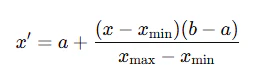
x:正規化したい元の値 -
x_min:対象データの最小値 -
x_max:対象データの最大値 -
x':正規化された値(通常 [0,1] の範囲)
任意の範囲 [a, b] にスケーリングしたい場合:
特徴
メリット
- 実装が非常にシンプル
- 元のデータの分布を保持しつつスケーリングできる
- 特にニューラルネットワークのような距離に敏感なアルゴリズムと相性が良い
デメリット
- 外れ値(アウトライヤー)に非常に弱い
-
x_maxとx_minに依存するため、テストデータにこれらの範囲外の値があると正しくスケーリングできない
実装例(Python)
from sklearn.preprocessing import MinMaxScaler
import numpy as np

# サンプルデータ
data = np.array([[10], [20], [30], [40], [50]])

# Min-Max正規化
scaler = MinMaxScaler()
scaled_data = scaler.fit_transform(data)

print(scaled_data)
- x_min = 10
- x_max = 50
- 差:x_max - x_min = 40
| 元の値 | 計算式 | 正規化後の値 |
|---|---|---|
| 10 | (10 - 10) / 40 | 0.0 |
| 20 | (20 - 10) / 40 | 0.25 |
| 30 | (30 - 10) / 40 | 0.5 |
| 40 | (40 - 10) / 40 | 0.75 |
| 50 | (50 - 10) / 40 | 1.0 |
どんなときに使う?
- 特徴量のスケールがバラバラな場合
- k近傍法(KNN)やサポートベクターマシン(SVM)など、距離に基づくアルゴリズムを使うとき
- ニューラルネットワークでの学習前の前処理
補足:他の正規化との違い
| 手法 | スケーリング範囲 | 外れ値への強さ | 使用シーン |
|---|---|---|---|
| Min-Max正規化 | 通常 [0, 1] | 弱い | データが一定の範囲に収まっているとき |
| Zスコア正規化(標準化) | 平均0・分散1 | 強い | 外れ値が存在する場合 |
| ロバストスケーリング | 四分位数に基づく | とても強い | 外れ値が多いとき |