
If you have spent any time on a sheet metal shop floor, you already know the frustration. A batch of parts comes off the press brake, and something is off. The holes do not line up. The bend angle is slightly wrong. The material finish is not what the customer specified. And just like that, hours of work and hundreds of dollars in material head straight to the scrap bin.
The unfortunate truth is that most sheet metal scrap and rework does not start on the shop floor. It starts much earlier in the drawing. Poorly prepared fabrication drawings are one of the biggest hidden costs in sheet metal manufacturing. When a drawing is missing critical information, or contains conflicting data, every person downstream is forced to guess. And guesses in manufacturing are expensive.
The Real Cost of Inadequate Sheet Metal Drawings
Industry estimates suggest that sheet metal drawing related errors account for up to 25–30% of total production rework expenses on a job.
For sheet metal fabricators working on tight margins, that is a number you simply cannot ignore. Common consequences include incorrect flat patterns leading to wasted raw material, wrong bend angles causing parts to fail inspection, missing surface finish callouts resulting in rejected parts after processing, and CNC programming delays because flat pattern data is absent from the drawing package.
Where Better Sheet Metal Detailing Makes the Difference
Better sheet metal detailing is not about making drawings look neat. It is about giving fabricators every piece of information they need to produce a correct part the first time.
Accurate Flat Pattern and Bend Allowance Data
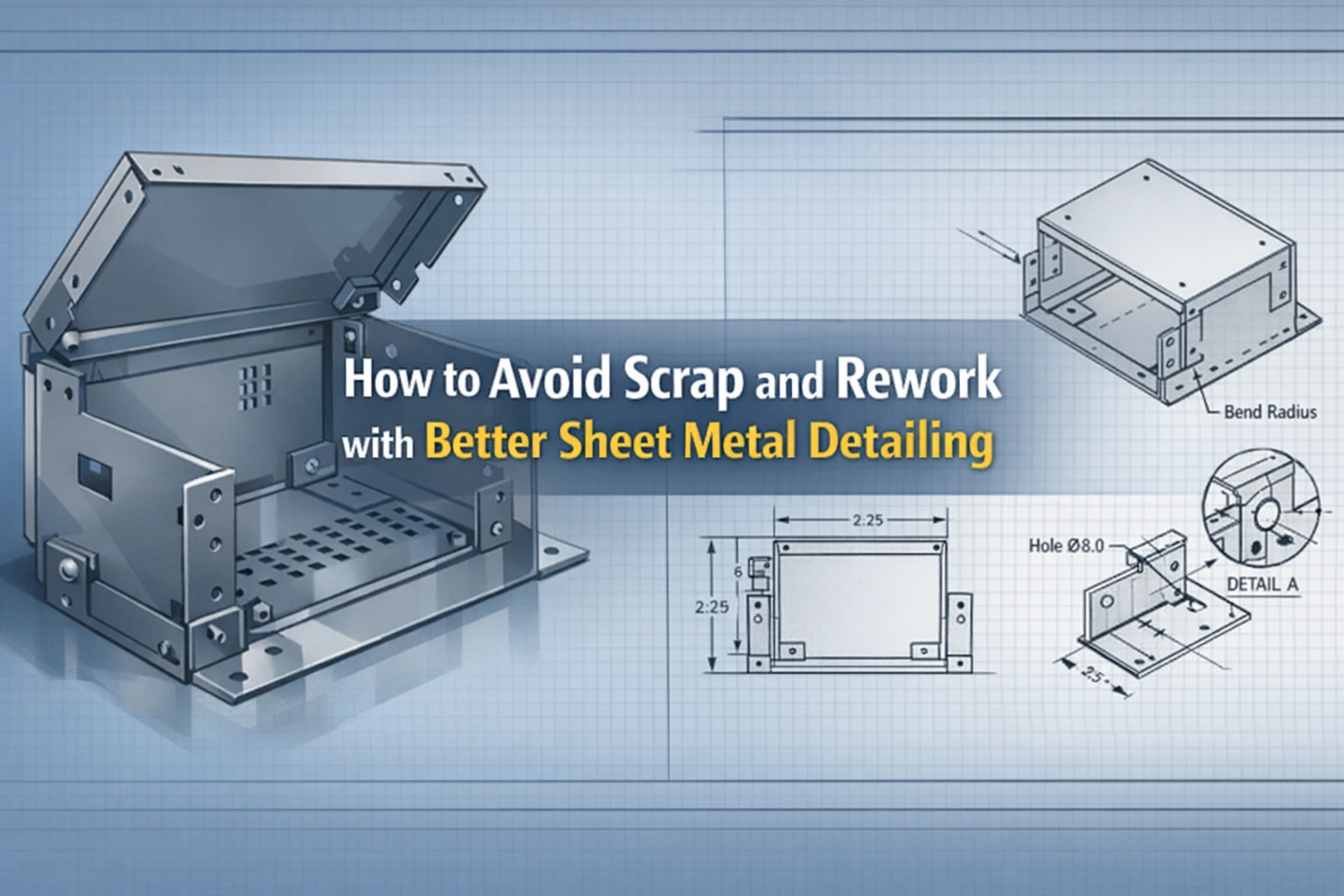
One of the most common causes of scrap in sheet metal fabrication is an incorrect flat blank size. This happens when bend allowance or K-factor values are missing or assumed incorrectly. A well-prepared sheet metal detailed drawings for fabrication clearly states the material thickness, bend radius, K-factor, and developed flat pattern dimensions so the fabricator does not have to calculate or guess. When this information is accurate, parts come off the brake correct the first time.
Complete Material and Finish Specifications
A drawing that simply says "steel" is not a fabrication drawing it is an invitation for a mistake. Professional sheet metal shop drawings specify the exact material grade, sheet thickness, and post-processing requirements including powder coating, anodizing, or galvanizing standards. Missing this information is a direct path to rejected parts and costly reprocessing.
Clear Hole, Cutout, and Hardware Callouts
Sheet metal parts often include punched holes, laser-cut slots, countersinks, and pressed hardware like PEM inserts or rivet nuts. When these are not properly called out with correct dimensions, tolerances, and thread specifications, fabricators are left interpreting drawings on their own. Detailed sheet metal drawings include hole charts, hardware callouts with part numbers, and clear indicators of which holes are tapped, clearance, or countersunk.
Weld Symbols and Assembly Instructions
Sheet metal assemblies that rely on welding require accurate weld symbols based on AWS or ISO standards. Without them, welders default to their own judgment, which may not match design intent. A drawing that properly communicates weld type, size, and location eliminates this ambiguity and reduces post-weld rework significantly.
Tolerances That Reflect Manufacturing Reality
When a drawing demands tighter tolerances than a standard sheet metal process can reliably achieve, parts will continuously fail inspection. Good sheet metal detailing applies appropriate general tolerances such as ISO 2768 or ASME Y14.5 and only specifies tight tolerances where function genuinely requires it.
The Role of DXF Files and CNC-Ready Drawing Packages
Modern sheet metal fabrication depends on CNC laser cutting, punching, and press brake programming. A drawing package without a properly prepared DXF flat pattern file creates an unnecessary bottleneck. Fabrication-ready packages should include clean DXF files with layer separation for cut lines, bend lines, and annotations. When software like SolidWorks, AutoCAD, or Inventor is used correctly by an experienced detailer, generating these files is straightforward and eliminates programming delays on the shop floor.
Final Thoughts
Scrap and rework are not just shop floor problems they are drawing problems. Every time a fabricator has to stop and question a drawing, or make a judgment call because information is missing, the risk of a costly mistake goes up.
Better sheet metal detailing protects the fabricator, satisfies the client, and keeps production running efficiently. The drawing is where quality is either built in or left out. That decision is made long before the first cut.