Reference
ディープラーニングによるホットドッグ検出器のレシピ
料理きろくにおける料理/非料理判別モデルの詳細
Library
import os

import numpy as np
import matplotlib.pyplot as plt
%matplotlib inline
from PIL import Image

from keras.preprocessing.image import ImageDataGenerator

from keras.applications.resnet50 import ResNet50
from keras.models import Model
from keras.layers import Conv2D, SpatialDropout2D, GlobalAveragePooling2D
from keras.layers import Activation, GlobalAveragePooling2D
from keras.regularizers import l2
from keras.callbacks import EarlyStopping
Data
train_path = '../input/hot-dog-not-hot-dog/seefood/train'
test_path = '../input/hot-dog-not-hot-dog/seefood/test'

train_hot_dog_path = '../input/hot-dog-not-hot-dog/seefood/train/hot_dog'
train_not_hot_dog_path = '../input/hot-dog-not-hot-dog/seefood/train/not_hot_dog'
train_data_hd = [os.path.join(train_hot_dog_path, filename)
                 for filename in os.listdir(train_hot_dog_path)]
train_data_nhd = [os.path.join(train_not_hot_dog_path, filename)
                  for filename in os.listdir(train_not_hot_dog_path)]

test_hot_dog_path = '../input/hot-dog-not-hot-dog/seefood/test/hot_dog'
test_not_hot_dog_path = '../input/hot-dog-not-hot-dog/seefood/test/not_hot_dog'
test_data_hd = [os.path.join(test_hot_dog_path, filename)
                for filename in os.listdir(test_hot_dog_path)]
test_data_nhd = [os.path.join(test_not_hot_dog_path, filename)
                 for filename in os.listdir(test_not_hot_dog_path)]

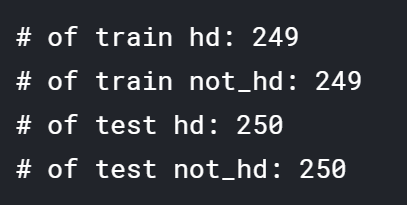
print ('# of train hd:', len(train_data_hd))
print ('# of train not_hd:', len(train_data_nhd))
print ('# of test hd:', len(test_data_hd))
print ('# of test not_hd:', len(test_data_nhd))
img_size = 224

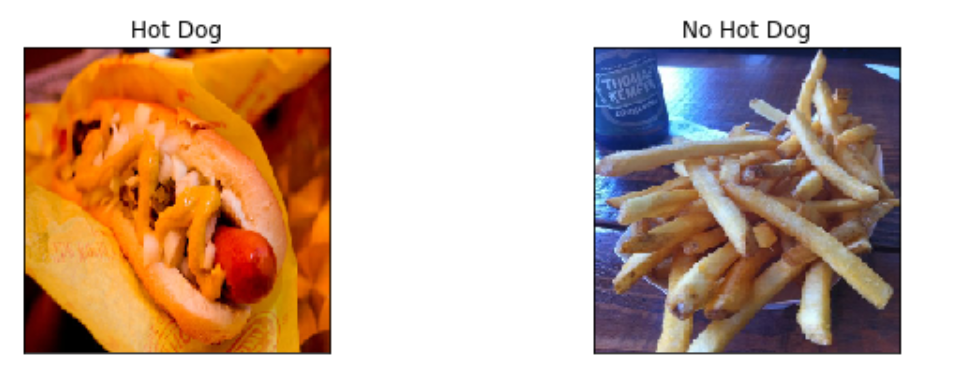
index = np.random.randint(len(train_data_hd))

print (train_data_hd[index])
img_hd = Image.open(train_data_hd[index]).resize((img_size, img_size))
print (train_data_nhd[index])
img_nhd = Image.open(train_data_nhd[index]).resize((img_size, img_size))

fig = plt.figure(figsize = (10, 3))
ax1 = fig.add_subplot(1, 2, 1)
ax1.imshow(img_hd)
ax1.set_xticks([])
ax1.set_yticks([])
ax1.set_title('Hot Dog')

ax2 = fig.add_subplot(1, 2, 2)
ax2.imshow(img_nhd)
ax2.set_xticks([])
ax2.set_yticks([])
ax2.set_title('No Hot Dog')

plt.show()
img_size = 224
batch_size = 32

train_datagen = ImageDataGenerator(
        rescale=1./255,
        shear_range=0.2,
        zoom_range=0.2,
        horizontal_flip=True)

test_datagen = ImageDataGenerator(rescale=1./255)

train_generator = train_datagen.flow_from_directory(
    train_path,
    target_size=(img_size, img_size),
    batch_size=batch_size,
    class_mode='categorical',
    classes=['not_hot_dog', 'hot_dog']
)

validation_generator = test_datagen.flow_from_directory(
    test_path,
    target_size=(img_size, img_size),
    batch_size=batch_size,
    class_mode='categorical',
    classes=['not_hot_dog', 'hot_dog']
)

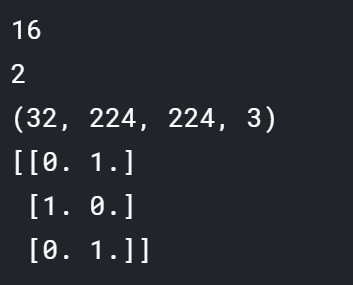
print  (len(train_generator))
print  (len(train_generator[0]))
print  (train_generator[0][0].shape)
print  (train_generator[0][1][:3])
ResNet
weights = '../input/resnet50/resnet50_weights_tf_dim_ordering_tf_kernels_notop.h5'

base_model = ResNet50(input_shape=(img_size, img_size, 3),
                       weights=weights,
                       include_top=False)

x = base_model.output
x = SpatialDropout2D(0.3)(x)
x = Conv2D(4, (1,1), activation="relu", use_bias=True,
           kernel_regularizer=l2(0.001))(x)
x = SpatialDropout2D(0.3)(x)
patch = Conv2D(2, (3, 3), activation="softmax", use_bias=True,
               padding="same",
               kernel_regularizer=l2(0.001))(x)

patch_model = Model(inputs=base_model.input, outputs=patch)

x = GlobalAveragePooling2D()(patch)
logits = Activation("softmax")(x)

classifier = Model(inputs=base_model.input, outputs=logits)

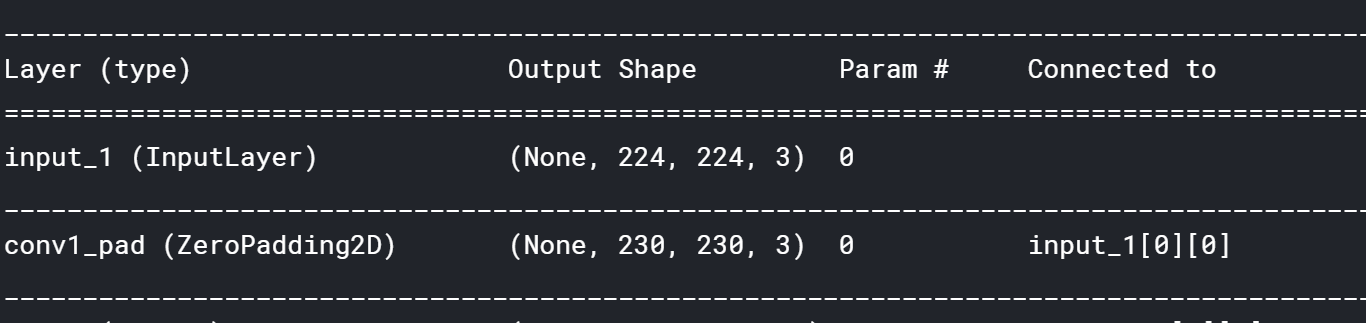
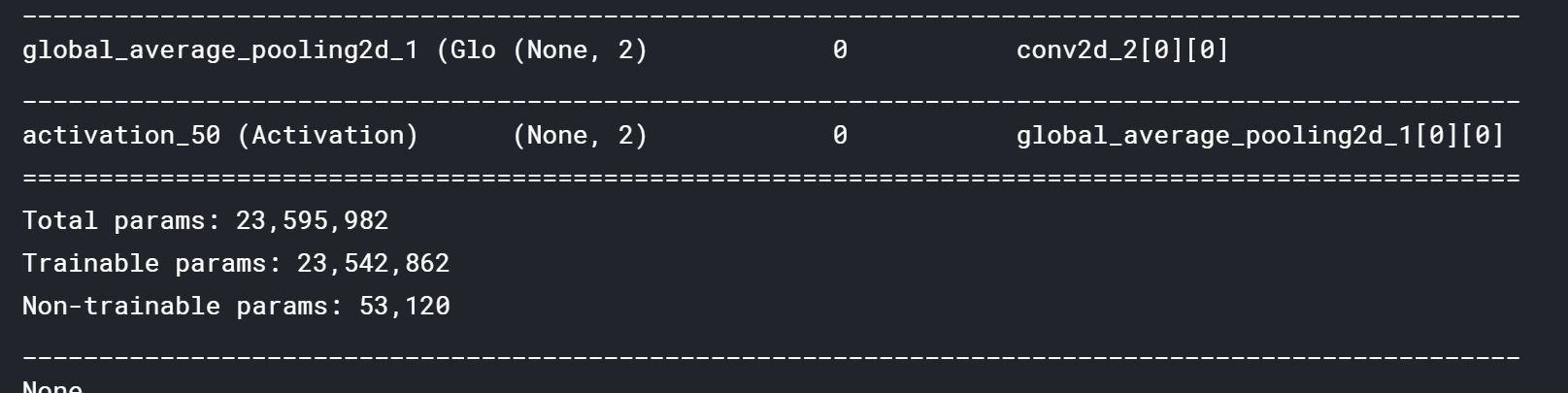
print (patch_model.summary())
print (classifier.summary())
for layer in base_model.layers:
    layer.trainable = False

classifier.compile(optimizer="adam",
                   loss="categorical_crossentropy", metrics=["accuracy"])

%%time
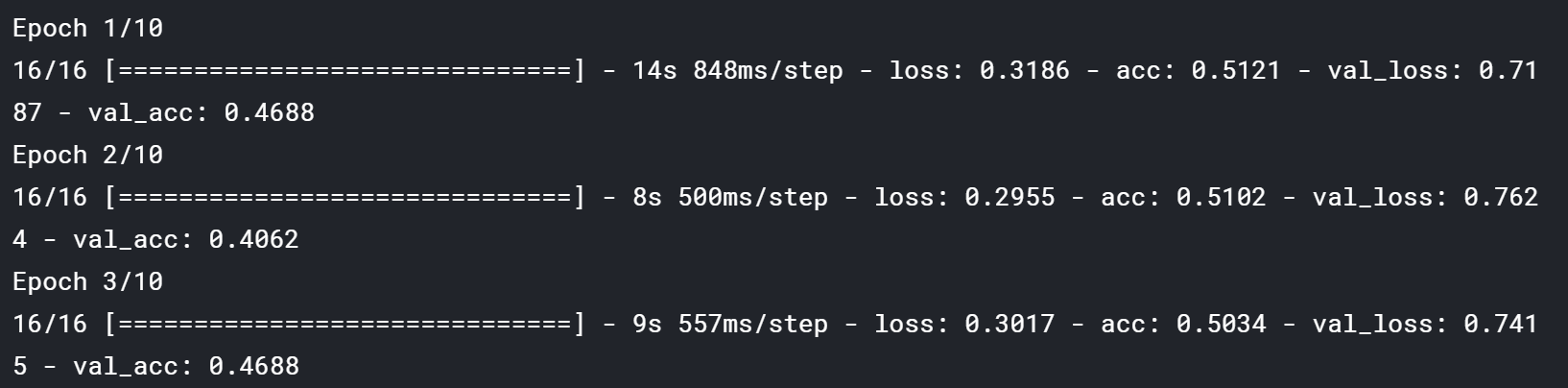
epochs = 10

earlystop = EarlyStopping(monitor='val_acc', mode='max', patience=3, verbose=1)

history = classifier.fit_generator(train_generator,
                                   steps_per_epoch=len(train_generator),
                                   class_weight={0: .75, 1: .25},
                                   epochs=epochs,
                                   validation_data=validation_generator,
                                   validation_steps=1,
                                   callbacks=[earlystop],
                                   verbose=1)
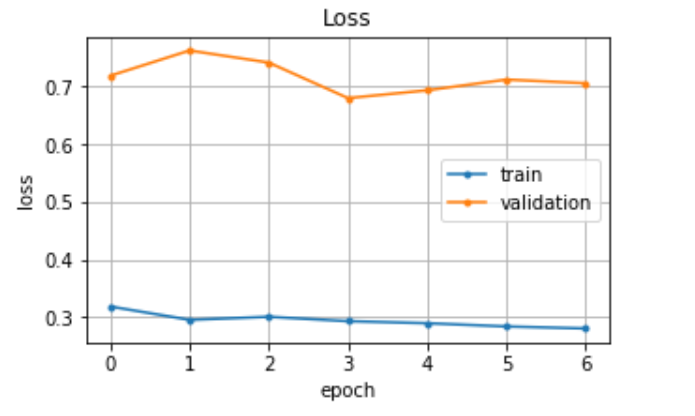
plt.figure(figsize =(5,3))
plt.plot(history.history['loss'], marker='.', label='train')
plt.plot(history.history['val_loss'], marker='.', label='validation')
plt.title('Loss')
plt.grid(True)
plt.xlabel('epoch')
plt.ylabel('loss')
plt.legend(loc='best')
plt.show()

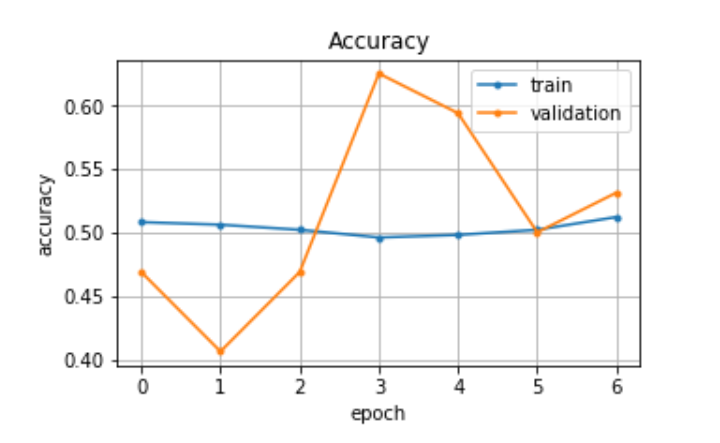
plt.figure(figsize =(5,3))
plt.plot(history.history['acc'], marker='.', label='train')
plt.plot(history.history['val_acc'], marker='.', label='validation')
plt.title('Accuracy')
plt.grid(True)
plt.xlabel('epoch')
plt.ylabel('accuracy')
plt.legend(loc='best')
plt.show()
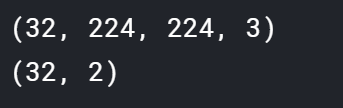
output_x = (validation_generator[0][0])
output_y = validation_generator[0][1]

print (output_x.shape)
print (output_y.shape)

print(classifier.evaluate(output_x, output_y))

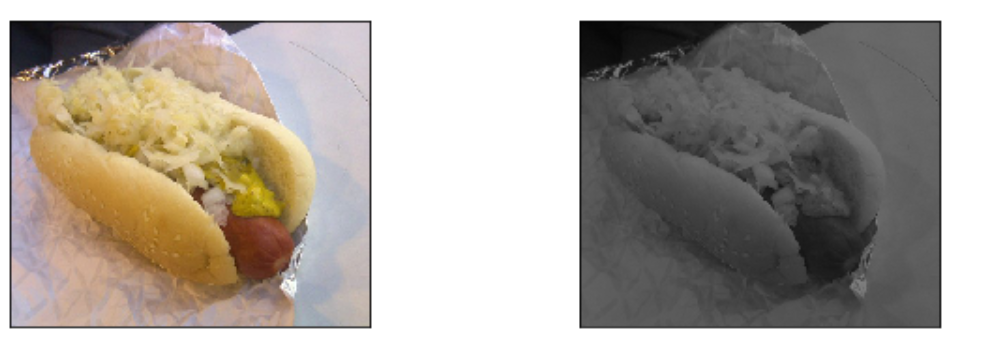
img_size = 224
threshold = 0.99
border = 8

index = np.random.randint(len(train_data_hd))
path = train_data_hd[index]

img = Image.open(path)

data = np.array(img.resize((img_size, img_size)))/255.0
patches = patch_model.predict(data[np.newaxis])

masks = patches[0].transpose(2, 0, 1)
masks = masks[1] - masks[0]
masks = np.clip(masks, threshold, 1.0)
masks = 255.0 * (masks - threshold) / (1.0 - threshold)
masks = Image.fromarray(masks.astype(np.uint8)).resize(img.size, Image.BICUBIC)
grayscale = img.convert("L").convert("RGB").point(lambda p: p * 0.5)
composite = Image.composite(img, grayscale, masks)

# canvas = Image.new(mode="RGB", size=(img.width * 2 + border, img.height),
#                   color="white")
# canvas.paste(img, (0,0))
# canvas.paste(composite, (img.width + border, 0))
# canvas

fig = plt.figure(figsize = (10, 3))
ax1 = fig.add_subplot(1, 2, 1)
ax1.imshow(img)
ax1.set_xticks([])
ax1.set_yticks([])

ax2 = fig.add_subplot(1, 2, 2)
ax2.imshow(composite)
ax2.set_xticks([])
ax2.set_yticks([])

plt.show()
ref
def patch_infer(img):
    data = np.array(img.resize((img_size, img_size)))/255.0
    patches = patch_model.predict(data[np.newaxis])
    return patches

def overlay(img, patches, threshold=0.99):
    # transposeはパッチをクラスごとに分けます。
    patches = patches[0].transpose(2, 0, 1)
    # hot_dogパッチ - not_hot_dogパッチ
    patches = patches[1] - patches[0]
    # 微妙なパッチをなくして
    patches = np.clip(patches, threshold, 1.0)
    patches = 255.0 * (patches - threshold) / (1.0 - threshold)
    # 数字を画像にして
    patches = Image.fromarray(patches.astype(np.uint8)).resize(img.size, Image.BICUBIC)
    # もとの画像を白黒に
    grayscale = img.convert("L").convert("RGB").point(lambda p: p * 0.5)
    # パッチをマスクに使って、元の画像と白黒の画像をあわせて
    composite = Image.composite(img, grayscale, patches)
    return composite

def process_image(path, border=8):
    img = Image.open(path)
    patches = patch_infer(img)
    result = overlay(img, patches)
    # 元の画像と変換された画像をカンバスに並べます
    canvas = Image.new(
        mode="RGB",
        size=(img.width * 2 + border, img.height),
        color="white")
    canvas.paste(img, (0,0))
    canvas.paste(result, (img.width + border, 0))
    return canvas
