
Introduction
As organizations increasingly rely on cloud data platforms to manage and analyze massive datasets, controlling costs has become a top priority. Among modern data warehousing solutions, Snowflake stands out for its scalability, flexibility, and performance. However, without a clear strategy, expenses can rise quickly, making snowflake cost optimization essential for maintaining financial efficiency.
Snowflake cost optimization focuses on managing compute, storage, and data transfer expenses while ensuring optimal performance. Businesses that proactively adopt snowflake cost optimization strategies can significantly reduce unnecessary spending and maximize the return on their data investments.
In a competitive digital economy, implementing effective snowflake cost optimization practices is not just beneficial but necessary for sustainable growth and long-term success.
Understanding Snowflake Cost Optimization
At its core, snowflake cost optimization involves analyzing how resources are consumed within the Snowflake environment and identifying opportunities to reduce waste. Snowflake’s unique architecture separates storage and compute, providing flexibility but also requiring careful management.
By focusing on snowflake cost optimization, organizations can monitor usage patterns, adjust resource allocation, and eliminate inefficiencies. This approach ensures that businesses only pay for what they use while maintaining high performance.
The ability to scale resources on demand is a major advantage, but it also highlights the importance of snowflake cost optimization. Without proper controls, auto-scaling features can lead to higher-than-expected costs.
Why Snowflake Cost Optimization Matters
As data volumes continue to grow, the need for efficient cost management becomes more critical. Snowflake cost optimization helps organizations maintain control over their cloud spending while leveraging the full capabilities of the platform.
One of the key reasons to prioritize snowflake cost optimization is financial transparency. By understanding how resources are used, businesses can make informed decisions about their data strategies.
Another important factor is operational efficiency. Effective snowflake cost optimization ensures that queries run efficiently, reducing compute usage and improving performance.
Additionally, snowflake cost optimization supports scalability. As organizations expand their data operations, optimized cost structures enable them to grow without incurring excessive expenses.
Key Areas of Snowflake Cost Optimization
To achieve effective snowflake cost optimization, organizations must focus on several critical areas within the Snowflake environment. Compute usage is one of the most significant cost drivers. Optimizing virtual warehouse sizes and usage patterns is essential for controlling expenses.
Storage management is another important aspect of snowflake cost optimization. While storage costs are relatively lower, inefficient data retention policies can still lead to unnecessary expenses.
Query performance also plays a crucial role. Poorly optimized queries can consume excessive compute resources, making query tuning a key component of snowflake cost optimization.
Data transfer costs should not be overlooked. Moving data between regions or external systems can add up quickly, highlighting the need for efficient data movement strategies as part of snowflake cost optimization.
Strategies to Improve Snowflake Cost Optimization
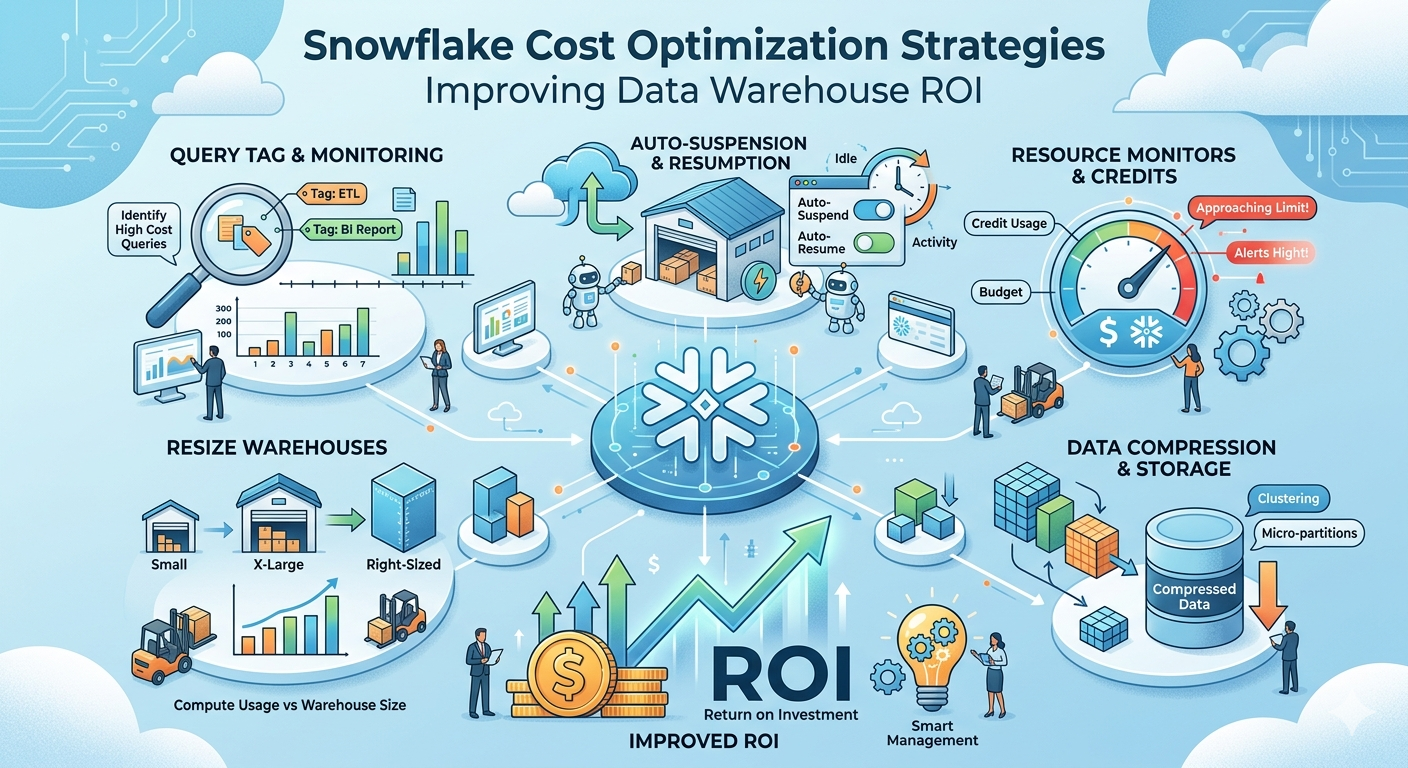
Organizations aiming to enhance snowflake cost optimization must adopt a proactive and strategic approach. Monitoring usage is a fundamental step, as it provides insights into how resources are consumed.
Adjusting warehouse sizes based on workload requirements is another effective strategy. This ensures that resources are not over-provisioned, supporting better snowflake cost optimization.
Auto-suspend and auto-resume features are powerful tools for managing compute costs. By enabling these features, organizations can avoid paying for idle resources, significantly improving snowflake cost optimization.
Query optimization is equally important. Efficient queries reduce compute usage and enhance performance, making them a key element of successful snowflake cost optimization.
Data lifecycle management also contributes to cost efficiency. By archiving or deleting unnecessary data, businesses can reduce storage costs and support overall snowflake cost optimization.
Challenges in Snowflake Cost Optimization
Despite its advantages, implementing snowflake cost optimization comes with challenges. One of the primary issues is the lack of visibility into resource usage. Without proper monitoring tools, it can be difficult to identify inefficiencies.
Another challenge is managing dynamic workloads. As usage patterns change, maintaining consistent snowflake cost optimization requires continuous monitoring and adjustment.
Complex query structures can also impact cost efficiency. Organizations must invest time and expertise to ensure that their queries support effective snowflake cost optimization.
Additionally, balancing performance and cost can be challenging. While reducing resource usage is important, it should not come at the expense of performance. Achieving this balance is a key aspect of snowflake cost optimization.
The Role of Automation in Snowflake Cost Optimization
Automation is playing an increasingly important role in enhancing snowflake cost optimization. Automated tools can monitor usage patterns, identify inefficiencies, and recommend optimization strategies.
By leveraging automation, organizations can implement real-time adjustments to their resource allocation, improving snowflake cost optimization without manual intervention.
Predictive analytics is another valuable capability. It enables businesses to anticipate future usage trends and plan their resources accordingly, supporting proactive snowflake cost optimization.
Automation also reduces the risk of human error, ensuring that optimization strategies are applied consistently across the organization.
Future Trends in Snowflake Cost Optimization
The future of snowflake cost optimization is shaped by advancements in technology and evolving business needs. As organizations continue to adopt data-driven strategies, the demand for efficient cost management will grow.
Artificial intelligence is expected to play a significant role in snowflake cost optimization. AI-driven tools will provide deeper insights into usage patterns and recommend more effective optimization strategies.
Integration with FinOps practices is another emerging trend. By aligning financial and operational goals, businesses can achieve better snowflake cost optimization and overall efficiency.
Real-time monitoring and analytics will also become more advanced, enabling organizations to respond quickly to changes in usage and maintain optimal cost structures.
Conclusion
In a world where data drives business success, managing costs effectively is essential. Snowflake cost optimization provides the strategies and tools needed to control expenses while maximizing performance.
By adopting robust snowflake cost optimization practices, organizations can improve efficiency, reduce waste, and achieve better returns on their data investments. These efforts not only enhance financial stability but also support long-term growth.Ultimately, snowflake cost optimization empowers businesses to harness the full potential of their data platforms while maintaining control over costs, making it a critical component of modern data management strategies.