
Introduction
In the fast-growing world of mobile applications, ensuring quality and performance is more important than ever. Developers and businesses alike need reliable ways to test applications before they reach users. This is where the concept of android testing framework is based on becomes highly relevant.
Understanding android testing framework is based on helps developers build stable, secure, and high-performing applications. Testing frameworks provide structured approaches to validate app functionality, detect bugs, and ensure a smooth user experience. As mobile usage continues to rise, knowing how android testing framework is based on modern tools and principles becomes essential for success.
Android Testing Framework Is Based on Core Architecture
To understand how android testing framework is based on, it is important to explore its underlying architecture. The Android testing framework is built on a combination of libraries, APIs, and testing tools that work together seamlessly.
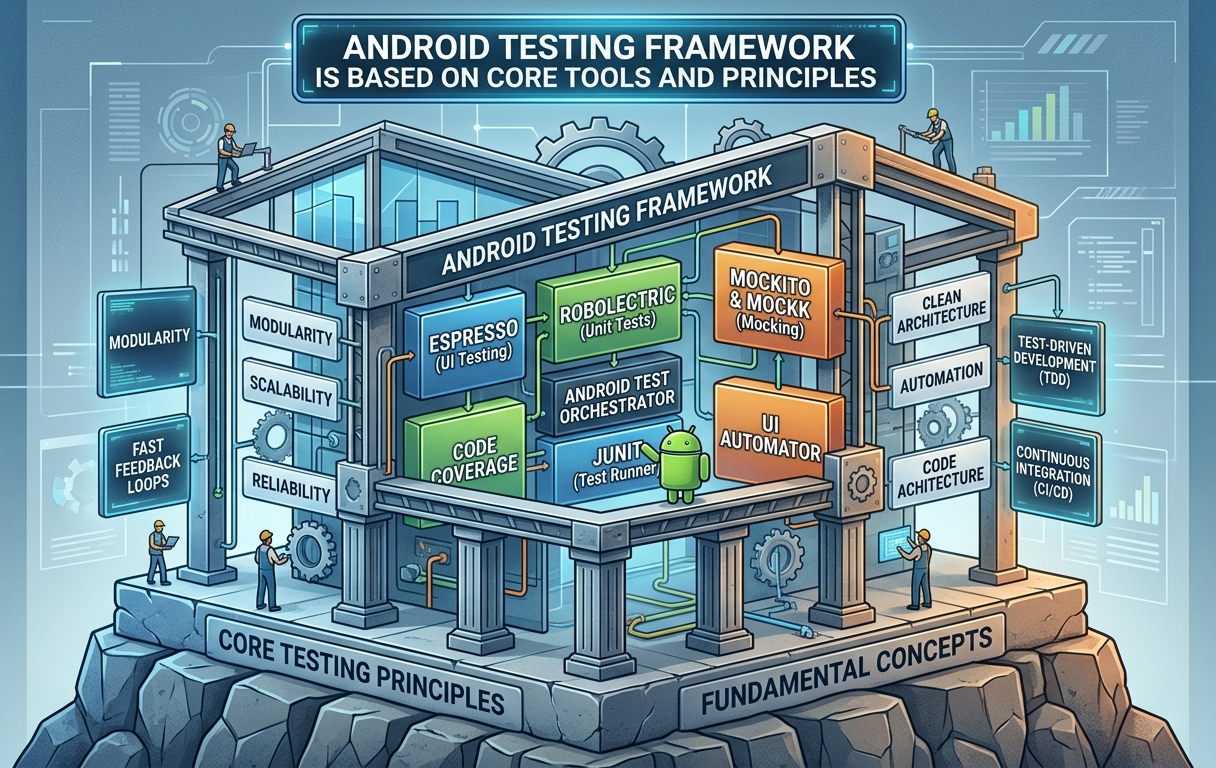
At its foundation, android testing framework is based on the Android SDK testing tools and the Java testing ecosystem. It integrates with popular frameworks that allow developers to create and run tests efficiently.
This architecture ensures flexibility and scalability. Developers can test different components of an application, from user interfaces to backend logic. By understanding how android testing framework is based on these core elements, teams can create more reliable applications.
Role of JUnit in Android Testing
A key aspect of how android testing framework is based on is its reliance on JUnit. JUnit is a widely used testing framework in Java that provides a simple and effective way to write and execute tests.
In Android development, JUnit is used for unit testing, allowing developers to verify individual components of their code. This ensures that each part of the application functions correctly before integration.
Because android testing framework is based on JUnit, developers benefit from a familiar and well-documented testing environment. This makes it easier to adopt best practices and maintain code quality.
Integration of Espresso for UI Testing
Another important component in understanding android testing framework is based on is Espresso. Espresso is a testing framework designed specifically for user interface testing in Android applications.
It allows developers to simulate user interactions and verify that the app behaves as expected. This is crucial for delivering a seamless user experience.
Since android testing framework is based on tools like Espresso, developers can automate UI testing and ensure consistency across different devices and screen sizes. This enhances the overall quality of the application.
Importance of Instrumentation Testing
Instrumentation testing is another critical element of how android testing framework is based on modern practices. These tests run on real devices or emulators and provide a more accurate representation of how the app will perform in real-world scenarios.
Through instrumentation testing, developers can validate interactions between different components of the application. This includes testing APIs, databases, and user interfaces together.
Because android testing framework is based on this approach, it ensures comprehensive testing that goes beyond isolated components. This leads to more robust and reliable applications.
Automation in Android Testing Frameworks
Automation plays a significant role in how android testing framework is based on efficiency and scalability. Automated testing allows developers to run tests repeatedly without manual intervention.
This not only saves time but also reduces the risk of human error. Automated tests can be integrated into continuous integration pipelines, ensuring that every update is thoroughly tested.
By leveraging automation, android testing framework is based on practices that support rapid development and consistent quality. This is especially important in agile development environments.
Benefits of Using Android Testing Frameworks
Understanding android testing framework is based on also involves recognizing its benefits. One of the main advantages is improved code quality. Regular testing helps identify and fix issues early in the development process.
Another benefit is faster development cycles. With automated testing, developers can quickly validate changes and release updates more frequently.
Additionally, android testing framework is based on principles that enhance user satisfaction. By ensuring that applications function smoothly, businesses can deliver better experiences to their users.
Challenges in Android Testing
Despite its advantages, android testing framework is based on systems that can present challenges. One common issue is device fragmentation. Android applications must work across a wide range of devices with different configurations.
Another challenge is maintaining test scripts. As applications evolve, tests must be updated to reflect new features and changes.
Even with these challenges, understanding how android testing framework is based on structured methodologies helps developers overcome obstacles and maintain high standards.
Future Trends in Android Testing Frameworks
The future of android testing framework is based on advancements in technology. Artificial intelligence and machine learning are expected to play a larger role in automating testing processes.
Cloud-based testing is also gaining popularity, allowing developers to test applications on a wide range of devices without needing physical hardware.
As these trends continue to evolve, android testing framework is based on more advanced tools and techniques that will further improve efficiency and accuracy.
Conclusion
In conclusion, understanding how android testing framework is based on core tools and principles is essential for modern app development. From JUnit and Espresso to automation and instrumentation testing, each component plays a vital role in ensuring application quality.
By adopting these frameworks, developers can create reliable, high-performing applications that meet user expectations. While challenges exist, the benefits of using structured testing approaches far outweigh the difficulties.
As technology continues to advance, the evolution of android testing framework is based on innovative solutions that will shape the future of mobile app development.