
Introduction
Every company that touches software eventually runs into the same wall: too many repetitive tasks, too little time, and too much room for human error. That is the exact gap that intelligent automation was built to close. Unlike the simple scripts and macros businesses relied on a decade ago, this newer approach blends artificial intelligence, machine learning, and traditional process automation into a single system that can think, adapt, and improve on its own. If you have ever wondered what is intelligent automation and why so many industry leaders talk about it as the next big operational shift, this article breaks it down in plain language, without the jargon that usually clouds the topic.
What Is Intelligent Automation In Simple Terms
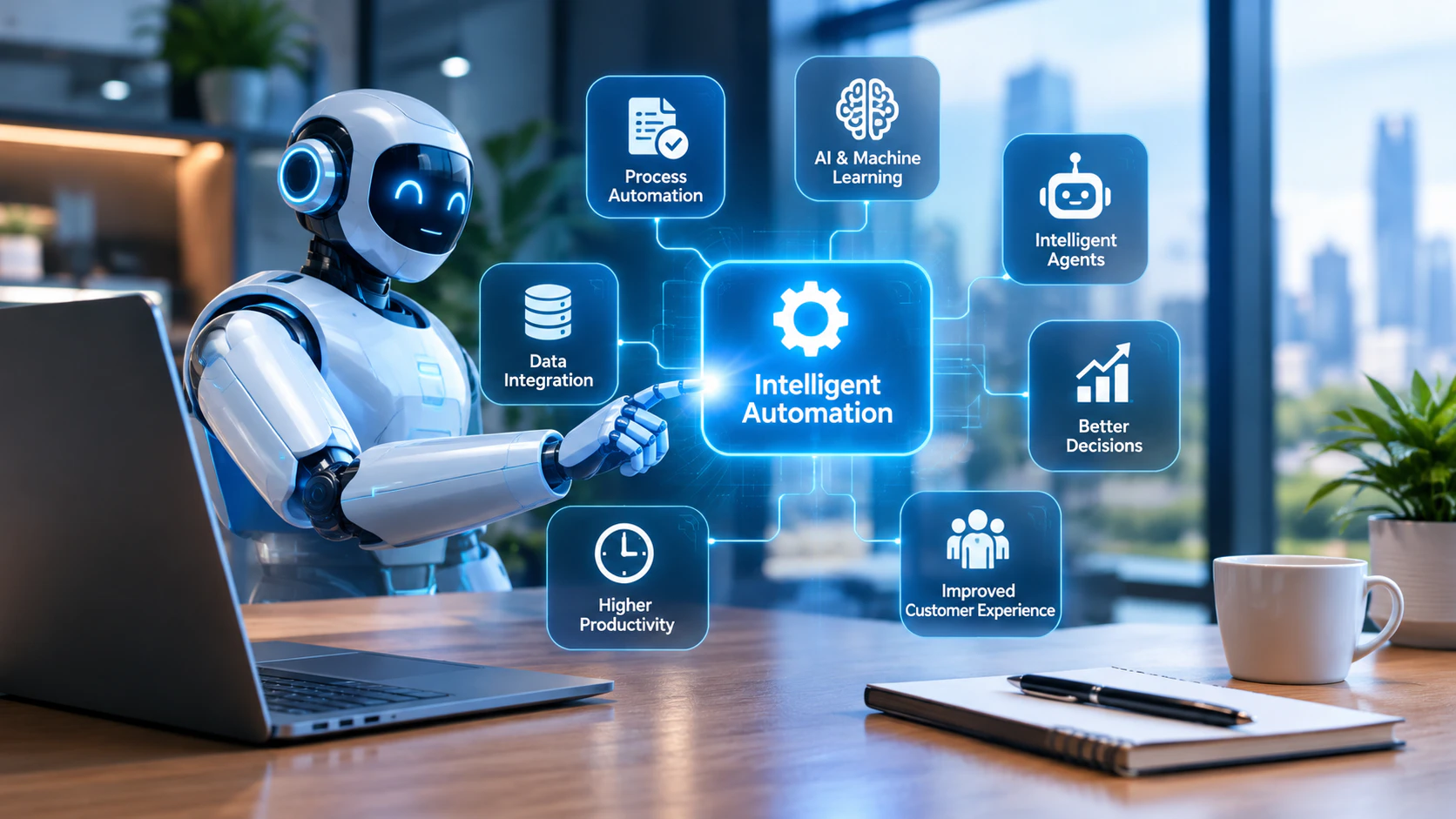
At its core, intelligent automation is the combination of robotic process automation (RPA), artificial intelligence, natural language processing, and data analytics working together to handle tasks that once required constant human supervision. A basic automation tool follows fixed rules. It does exactly what it is told and nothing more. Intelligent automation goes several steps further because it can read unstructured data, recognize patterns, make judgment calls within defined boundaries, and learn from the outcomes of its own decisions.
Picture a customer support workflow. A traditional bot might reply with a canned message when it spots a keyword. An intelligently automated system, on the other hand, can read the full context of a customer's message, pull relevant account history, decide the best next action, and only escalate to a human agent when the situation genuinely calls for it. That difference between rigid instruction-following and contextual decision-making is the heart of what is intelligent automation in practice.
Why Businesses Are Turning to This Technology
Organizations across finance, healthcare, retail, and manufacturing are adopting intelligent automation because the pressure to do more with fewer resources has never been higher. Manual data entry, invoice processing, compliance checks, and routine customer queries eat up hours that skilled employees could spend on higher-value work. When these repetitive tasks are handed over to a system that can also flag anomalies or suggest improvements, teams free up time for creative problem-solving and strategic planning instead of chasing paperwork.
There is also a quality argument. Humans get tired and distracted, especially with mundane tasks performed hundreds of times a day. A well-trained automation system does not lose focus the same way. It applies the same standard of accuracy to the first task of the day and the last one, which matters in fields like accounting, insurance claims, and regulatory reporting where a single mistake can trigger costly consequences.
Core Components That Make Automation Intelligent
The phrase itself hints at what separates this technology from ordinary automation software. The "intelligent" part usually comes from machine learning models that improve their accuracy over time as they process more data. The "automation" part refers to the workflow engines that actually execute tasks across different systems, whether that means moving data between a customer relationship management tool and an accounting platform or triggering a series of approvals inside a supply chain.
Natural language processing allows these systems to understand emails, contracts, and chat messages the way a person would, rather than only recognizing exact keywords. Computer vision, in some setups, lets automation tools read scanned documents, invoices, or handwritten forms and convert them into usable data. When these pieces are stitched together properly, the result is a system capable of handling entire end-to-end processes rather than just isolated steps.
Real World Applications Worth Knowing
Banks use intelligent automation to screen loan applications, verify documents, and detect fraudulent transactions in real time. Hospitals rely on it to manage patient scheduling, insurance verification, and billing so that clinical staff can focus on patient care instead of administrative backlog. Retailers apply it to inventory forecasting, so shelves are restocked before a shortage happens rather than after customers complain. Manufacturing plants use predictive maintenance systems built on the same principles to flag equipment issues before a costly breakdown occurs.
These examples share a common thread. The technology is not simply replacing a task; it is improving the quality and speed of a decision that once depended entirely on a person's judgment and availability.
Common Misconceptions People Should Understand
A lot of confusion surrounds this subject, partly because people assume automation and artificial intelligence are the same thing. They are related but distinct. Automation without intelligence just follows instructions. Artificial intelligence without automation can analyze data but cannot act on it independently. Pairing the two creates a system genuinely capable of thinking through a task and then carrying it out. Another myth worth addressing is the fear that this technology eliminates jobs altogether. In most real deployments, it changes the nature of work rather than erasing it, shifting employees away from repetitive tasks and toward roles that require empathy, creativity, and strategic thinking.
Getting Started with Intelligent Automation
Companies exploring this shift usually begin with a single process rather than an organization-wide overhaul. A finance team might automate invoice matching first, then expand into expense approvals once the initial rollout proves stable. This gradual approach allows teams to measure results, adjust the underlying models, and build internal confidence before scaling up. Choosing the right starting point, one with clear rules but high manual effort, tends to produce the fastest and most convincing return on investment.
Final Thoughts
The technology behind intelligent automation is no longer experimental; it has become a practical tool that reshapes how businesses operate day to day. Understanding what is intelligent automation, how its components work together, and where it delivers the most value gives any organization a clearer path toward smarter, faster, and more reliable operations. As the tools continue to mature, the businesses that adapt early are the ones most likely to stay ahead of a rapidly changing operational landscape.