
Software-as-a-Service (SaaS) has changed the way businesses buy, deploy, and operate software. Instead of installing applications on local infrastructure, companies can subscribe to cloud platforms and access the tools they need through a browser or API.
CRM, accounting, project management, marketing, customer support, and analytics have all moved toward this model.
But SaaS is evolving again.
The next stage is not simply putting more software in the cloud. It is building software that understands an entire industry and abstracts away the infrastructure and operational complexity behind it.
This shift is driving the growth of vertical SaaS.
What Is Vertical SaaS?
Traditional SaaS usually solves a horizontal business problem.
For example:
A CRM can be used by companies in almost any industry.
Accounting software can support businesses across multiple sectors.
Project management tools can be used by software teams, manufacturers, agencies, and retailers.
Vertical SaaS takes a different approach.
Instead of solving a general business problem, it is designed around the specific workflows, regulations, data structures, and operational requirements of a particular industry.
A healthcare platform may understand patient workflows.
A logistics platform may understand shipments, routes, and fleet operations.
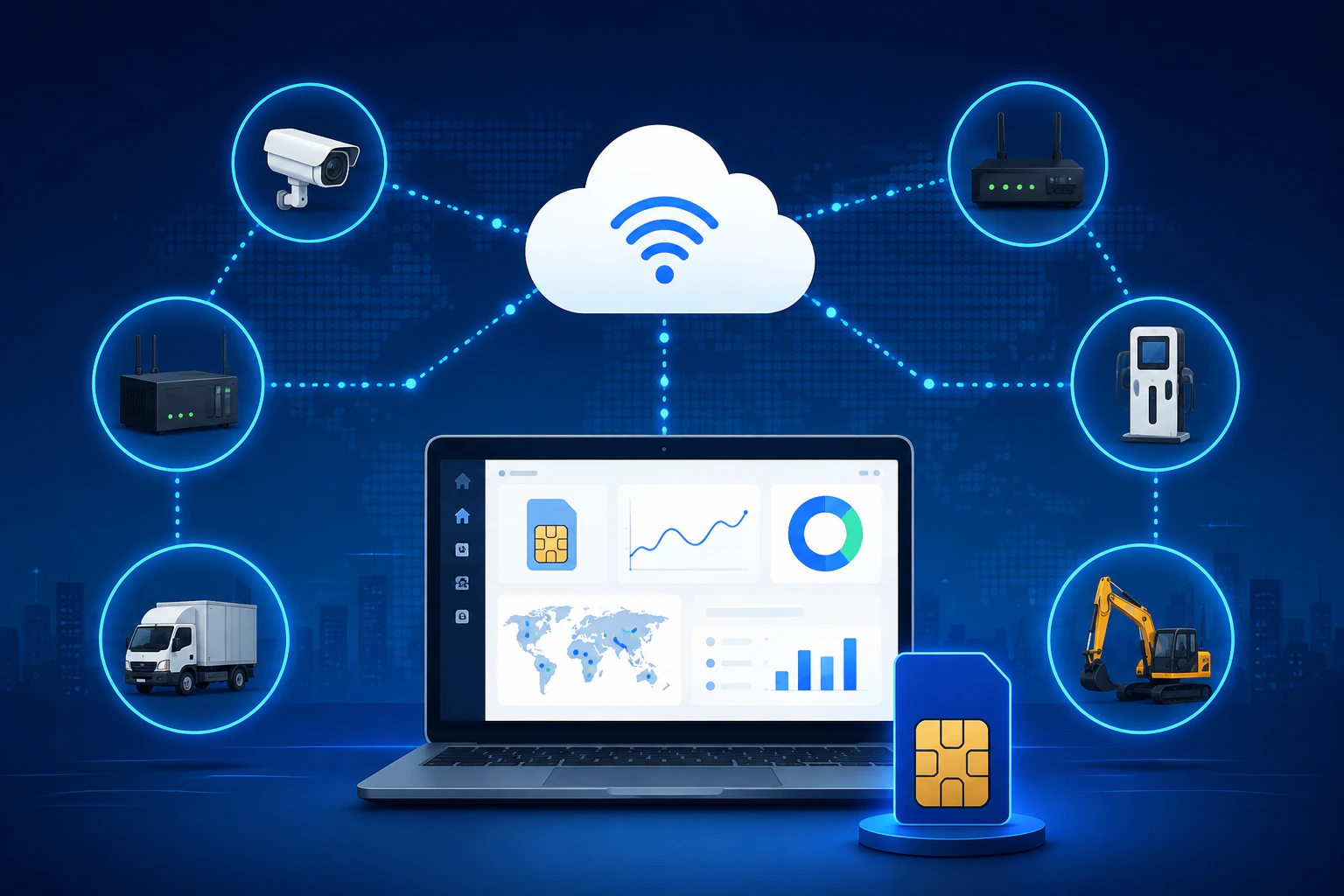
A telecom platform may understand SIM provisioning, carrier relationships, billing, usage, and connectivity management.
The value comes from hiding industry complexity behind a simpler software interface.
Why Vertical SaaS Is Growing
Many industries still rely on complicated combinations of legacy systems, spreadsheets, manual processes, and disconnected vendors.
A company may have excellent software for one part of its workflow while employees still manually transfer information between several other systems.
This creates three major problems:
Operational complexity
High implementation costs
Slow time to market
Vertical SaaS attempts to solve these problems by bringing industry-specific workflows into a single software layer.
Instead of forcing businesses to become experts in the underlying infrastructure, the platform handles much of that complexity.
This is particularly important in industries where infrastructure is difficult to build or integrate.
SaaS Is Moving From Tools to Infrastructure
The first generation of SaaS primarily replaced desktop and on-premise applications.
The second generation connected applications through APIs and cloud infrastructure.
The emerging generation is increasingly focused on becoming an operational layer for entire industries.
This means the software does more than display information.
It can:
Connect multiple systems
Automate workflows
Process transactions
Manage infrastructure
Analyze operational data
Trigger actions through APIs
Provide industry-specific compliance workflows
Support customers and internal teams
The distinction between "application" and "infrastructure" is therefore becoming less clear.
Telecom Is a Good Example
Telecommunications is an industry where this transition is particularly interesting.
Launching a connectivity product traditionally involves dealing with carriers,SIM or eSIM provisioning, billing, subscriber management, usage monitoring, compliance, and customer support.
A company that wants to offer connectivity may therefore need to integrate several different systems before it can even launch its product.
This is where vertical SaaS and infrastructure abstraction become valuable.
Instead of building every component internally, a business can use a specialized platform that provides the underlying connectivity and operational capabilities through software.
For example, Spenza provides an MVNE and connectivity management platform that brings together multi-operator connectivity, SIM/eSIM provisioning, billing, analytics, and customer-facing capabilities. This illustrates how a specialized SaaS platform can abstract telecom complexity so businesses can focus more on their product and customer experience.
The broader concept is similar to what SaaS has already done in other industries: turn complicated infrastructure into an accessible software service.
APIs Are the Foundation
APIs are one of the most important technologies enabling this transition.
An API allows one software system to communicate with another without requiring developers to understand the underlying infrastructure.
Consider a simple example.
A consumer electronics company sells a connected device.
When a customer purchases the device, the company's commerce platform could trigger an API request that:
Creates a subscriber account
Provisions an eSIM
Activates a connectivity plan
Starts billing
Sends activation information to the customer
Reports usage back to the company's dashboard
Without an integrated platform, these steps may require several systems and manual processes.
With an API-first SaaS platform, they can become part of a single automated workflow.
This is one reason API-first architecture has become so important to modern SaaS companies.
From Automation to Agentic SaaS
The next development is even more interesting.
SaaS platforms are beginning to incorporate AI agents that can reason about workflows instead of simply executing predefined rules.
Traditional automation might look like:
If usage exceeds a threshold → send an alert.
An agentic workflow could look more like:
Monitor connectivity usage → identify unusual consumption → investigate the device and historical patterns → determine whether the behavior is expected → recommend an action → request approval if necessary → execute the approved change.
This moves software from automation toward decision support and autonomous execution.
The software is no longer just waiting for a user to operate it.
It is actively working toward a business objective.
What This Means for SaaS Companies
For SaaS founders and product teams, this transition creates an important opportunity.
Instead of asking:
"What feature should we add?"
The more useful question may be:
"What part of the customer's workflow can we completely take care of?"
This changes product strategy.
A CRM doesn't need to stop at storing customer information.
A logistics platform doesn't need to stop at showing shipment status.
A telecom platform doesn't need to stop at displaying connectivity usage.
The next generation of SaaS products can increasingly become responsible for completing the workflow itself.
The Rise of Industry-Specific Platforms
As cloud infrastructure becomes easier to access, the competitive advantage of SaaS is increasingly moving toward domain knowledge.
The most successful vertical SaaS platforms may combine:
Industry-specific workflows
APIs
Embedded payments
Compliance
Automation
Analytics
AI agents
Infrastructure integrations
Customer-facing experiences
This creates a much deeper relationship between the software platform and its customers.
Switching from such a platform is no longer simply replacing an application.
It may mean replacing an entire operational layer.
Where SaaS Goes Next
The future of SaaS is likely to involve three major changes.
1. Software Becomes More Specialized
Instead of generic applications trying to serve every industry, more platforms will be designed around specific industries and workflows.
2. Software Becomes More Autonomous
AI agents will increasingly monitor systems, identify problems, plan actions, and execute routine workflows.
Human employees will remain involved where judgment, accountability, or approval is important.
3. Software Becomes Infrastructure
The strongest SaaS platforms may become invisible infrastructure.
Customers will not necessarily think about the underlying systems.
They will simply expect their business processes to work.
That is already happening in areas such as payments, cloud infrastructure, communications, identity, and connectivity.
Final Thoughts
SaaS started by making software easier to access.
Vertical SaaS is taking that idea further by making entire industry workflows easier to operate.
The most interesting platforms are no longer simply dashboards sitting on top of databases. They are becoming operational layers that connect infrastructure, data, APIs, automation, and increasingly AI.
Telecom provides a useful example of this transformation. Instead of every company building its own carrier integrations, provisioning systems, billing infrastructure, and connectivity management tools, specialized platforms can abstract those complexities behind software APIs and unified interfaces.
As AI becomes more capable, the distinction between SaaS application and autonomous business infrastructure will become even less clear.
The future may not be about buying software to help employees do their work.
It may be about subscribing to software that does more of the work itself.