

In today’s fast-paced digital world, software users expect applications to be fast, reliable, and error-free. A single crash, slow response, or unexpected bug can push users toward competitors. That is why modern businesses are investing more time and effort into structured testing strategies before releasing their products.
Rather than relying on a single testing method, successful teams combine multiple approaches to ensure quality at every stage of development. Three of the most important practices in this process are integration testing, end-to-end testing, and smoke testing. When used together, they create a strong foundation for building dependable software systems.
Why One Type of Testing Is Never Enough
Many startups and small teams still believe that basic testing is enough before launching a product. Unfortunately, this mindset often leads to performance issues, broken features, and unhappy customers.
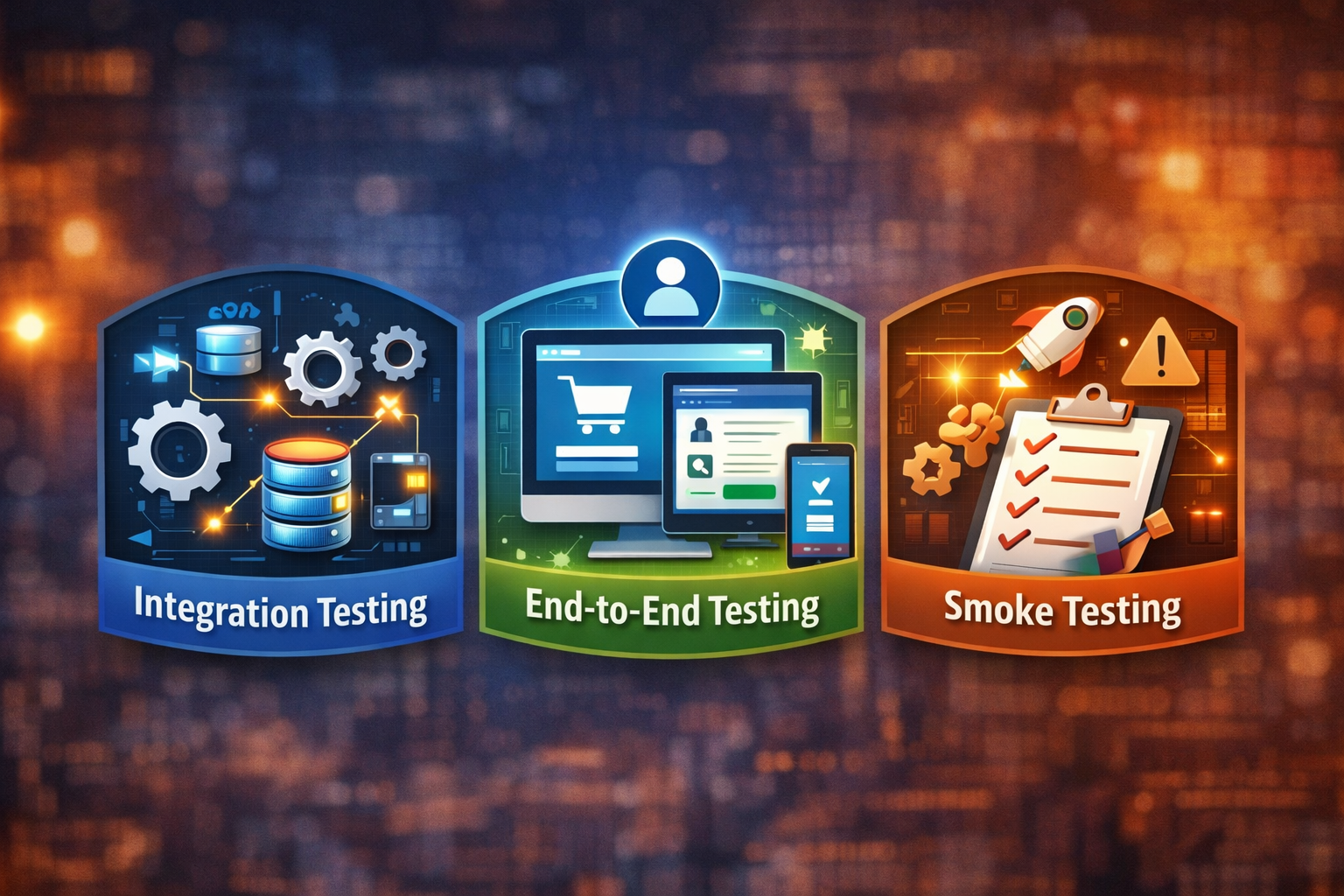
Each testing method focuses on a different layer of the system:
- Some tests check whether individual components work together.
- Some verify if the full user journey runs smoothly.
- Others ensure that the basic functions are stable after updates.
When these layers are ignored, problems appear later in production, where fixing them becomes expensive and risky.
Understanding Integration Testing in Modern Development
As software grows more complex, different modules, services, and APIs must communicate seamlessly. This is where integration testing becomes essential.
Instead of testing features in isolation, this approach checks how components interact with each other. For example:
- Does the payment system correctly connect with the user database?
- Is data flowing properly between backend services?
- Are third-party APIs responding as expected?
By validating these connections early, development teams can prevent major system failures and reduce debugging time.
In microservices-based architectures, integration testing plays an even bigger role because dozens of independent services must work together without conflict.
How End-to-End Testing Protects the User Experience
While integration tests focus on internal connections, end-to-end testing looks at the application from the user’s perspective.
It simulates real-life scenarios such as:
- Creating an account
- Logging in
- Making a purchase
- Submitting a form
- Receiving confirmation messages
This type of testing ensures that every step in the workflow functions correctly across different systems, databases, and interfaces.
Without proper end-to-end testing, teams may release features that work technically but fail in practical use. A checkout process might look fine in parts, yet break when a customer completes the final payment step.
Testing full journeys helps companies deliver smooth, frustration-free experiences.
The Role of Smoke Testing in Fast Releases
In agile and DevOps environments, software updates happen frequently. New code is pushed daily or even hourly. In such situations, running full test suites every time may slow down development.
This is where smoke testing becomes valuable.
Smoke tests are quick checks that verify whether the core functions of an application are working after a new build or update. They answer simple but critical questions:
- Does the application launch?
- Can users log in?
- Are major pages loading?
- Are essential APIs responding?
If these basic functions fail, there is no point in running deeper tests. Smoke testing saves time by catching major issues early and preventing faulty builds from moving forward.
Building a Balanced Testing Strategy
Relying on only one testing approach often creates blind spots. A balanced strategy combines different methods to cover all risk areas.
An effective testing workflow may look like this:
- Run smoke testing after every build to ensure stability.
- Perform integration testing to verify system connections.
- Execute end-to-end testing before major releases.
This layered approach improves confidence in the product and reduces unexpected failures in production.
Benefits of a Well-Planned Testing Process
Companies that invest in structured testing enjoy long-term advantages:
- Faster release cycles
- Lower maintenance costs
- Improved customer satisfaction
- Stronger brand reputation
- Reduced downtime
Instead of reacting to problems after launch, teams can prevent them in advance. This proactive mindset is what separates successful digital products from unstable ones.
Preparing for the Future of Software Quality
As artificial intelligence, cloud platforms, and distributed systems become more common, testing requirements will continue to grow. Manual checks alone will no longer be sufficient.
Organizations must focus on automation, continuous testing, and intelligent monitoring to keep pace with evolving technology.
By strengthening their approach to integration testing, end-to-end testing, and smoke testing, businesses can future-proof their development process and deliver reliable solutions in competitive markets.
Final Thoughts
Quality software is not created by chance. It is the result of careful planning, smart testing strategies, and consistent improvement.
When teams understand how different testing methods complement each other, they can build systems that are not only functional but also trustworthy and scalable. In a digital era where user expectations are higher than ever, investing in proper testing is no longer optional—it is essential.