
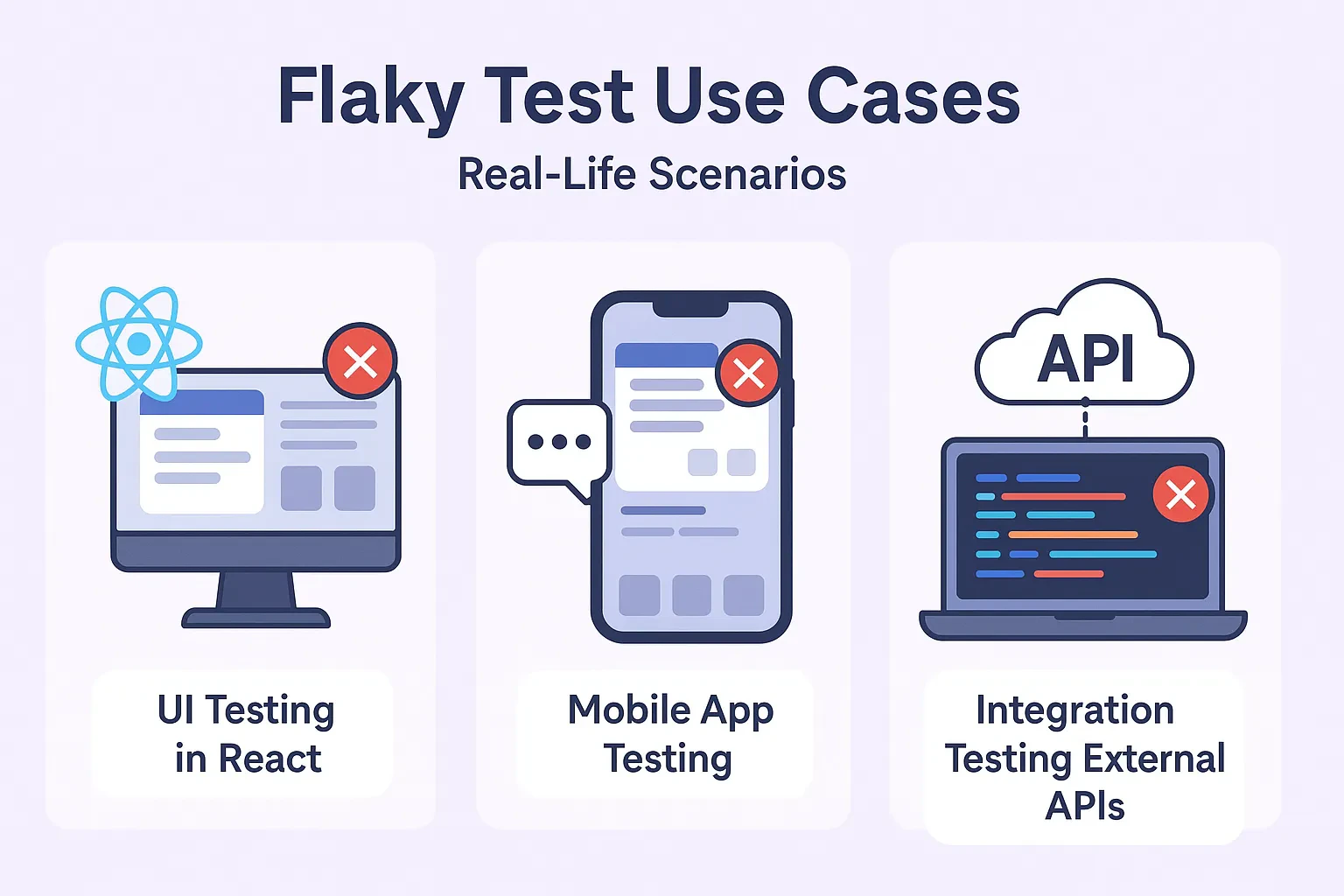
Few things frustrate engineers more than a failing test that passes on the next run without any code changes. These failures don’t just slow delivery—they slowly destroy trust in the test suite itself.
In modern microservice architectures, flaky tests are most commonly found in integration testing, where multiple services, environments, and dependencies interact. When instability creeps in, developers stop taking failures seriously, pipelines get ignored, and real bugs slip into production.
This guest post explores why integration tests become flaky, how that flakiness erodes developer confidence, and what high-performing teams do to fix it permanently.
Why Flaky Integration Tests Are So Dangerous
Flaky tests aren’t just a technical issue—they’re a cultural one.
What flakiness really causes:
- Developers rerun pipelines “just to see if it passes”
- Failed builds are dismissed instead of investigated
- CI/CD pipelines lose credibility
- Real regressions hide behind noisy failures
Over time, teams unconsciously stop trusting their tests. And once trust is gone, even a technically “green” pipeline becomes meaningless.
Why Integration Tests Are Especially Prone to Flakiness
Unlike unit tests, integration tests operate in an unpredictable environment.
Common sources of instability:
1. Real Network Calls
Latency, retries, and transient failures are part of real systems. Tests that don’t account for this will fail randomly.
2. Shared or Unstable Test Environments
Multiple teams hitting the same QA or staging environment leads to:
- Data collisions
- Unexpected state changes
- Resource contention
3. Poor Test Data Management
Hard-coded IDs, stale database records, or assumptions about existing data often break tests unexpectedly.
4. Over-Mocking or Under-Mocking
Mocks that don’t reflect real behavior cause tests to pass incorrectly—or fail when real services behave differently.
This is why integration testing must balance realism with control.
How Flaky Tests Kill Developer Confidence
Flakiness doesn’t fail loudly—it fails gradually.
The typical downward spiral:
- A test fails intermittently
- Developers rerun the pipeline
- The failure “fixes itself”
- Failures are ignored next time
- Real bugs slip through unnoticed
Eventually, teams rely more on manual verification or production monitoring than on automated tests—defeating the entire purpose of automation.
The Real Fix: Make Integration Tests Deterministic
Flaky tests don’t need more retries. They need determinism.
Here’s how teams fix them for good:
1. Control External Dependencies
If a test depends on external systems you don’t control, it will always be flaky.
Best practices:
- Stub third-party APIs
- Record and replay real API interactions
- Simulate failure scenarios intentionally
The goal is predictable behavior, not perfect realism.
2. Isolate Test Environments
Shared environments are a major flakiness multiplier.
What works better:
- Ephemeral environments spun up per PR
- Containerized dependencies
- Isolated databases or namespaces
Isolation ensures that one team’s test doesn’t break another team’s build.
3. Fix Test Data Once—and Reuse It Reliably
Test data should be:
- Deterministic
- Reproducible
- Resettable
Avoid relying on “whatever data exists.” Instead:
- Seed known datasets
- Reset state after each run
- Use immutable fixtures where possible
4. Replace Guesswork With Real Behavior
Many flaky tests exist because mocks drift from reality.
Modern teams increasingly:
- Capture real production traffic
- Generate mocks and stubs from actual requests
- Validate responses against real contracts
This reduces the gap between test behavior and production behavior—where flakiness often originates.
5. Run Integration Tests Earlier (Not Later)
Flaky tests hurt most when they fail late.
Shift-left strategies:
- Run critical integration tests on every pull request
- Fail fast on contract or schema mismatches
- Keep test suites small and focused
Short feedback loops reduce frustration and improve trust.
Case Study: Turning a Noisy Pipeline Into a Trusted One
A mid-size SaaS company struggled with integration tests that failed randomly several times a day. Developers reran pipelines so often that failures were ignored entirely.
What they changed:
- Removed brittle, hand-written mocks
- Introduced deterministic test data
- Isolated environments per PR
- Focused tests on service boundaries only
The result:
- Flaky failures dropped dramatically
- CI pipelines became a source of confidence
- Developers stopped rerunning builds “just in case”
Most importantly, tests started catching real issues again.
What to Test—and What to Avoid
Test These
- Service-to-service APIs
- Authentication and authorization flows
- Error handling and retries
- Async messaging paths
Avoid These
- UI flows (leave those to E2E tests)
- Third-party systems you don’t own
- Business logic already covered by unit tests
Final Thoughts: Reliability Builds Trust
Flaky integration tests don’t just slow teams down—they silently undermine engineering confidence.
The fix isn’t adding retries or ignoring failures. The fix is:
- Controlled environments
- Deterministic data
- Realistic behavior
- Focused test scope
When integration tests are reliable, developers trust them.
When developers trust them, pipelines move faster.
And when pipelines move faster, teams ship with confidence—not hope.
Reliable integration tests don’t just prevent bugs—they restore trust in the entire delivery process.