
原文の背景メモ: https://www.aceround.app/ja/blog/backend-developer-interview-ai
この記事は、バックエンド面接でよく出るキャッシュ設計を、Qiita向けに LFU Cache の O(1) 実装 として再構成したものです。前回の LRU Cache の続きです。
結論
LFU をヒープで書くと、挿入・参照・追い出しがすべて O(log n) になります。面接で求められるのは、だいたい次の形です。
-
get/putを 平均O(1)にする - 頻度が最小のキーを捨てる
- 最小頻度が複数あるときは、その中の LRU を捨てる
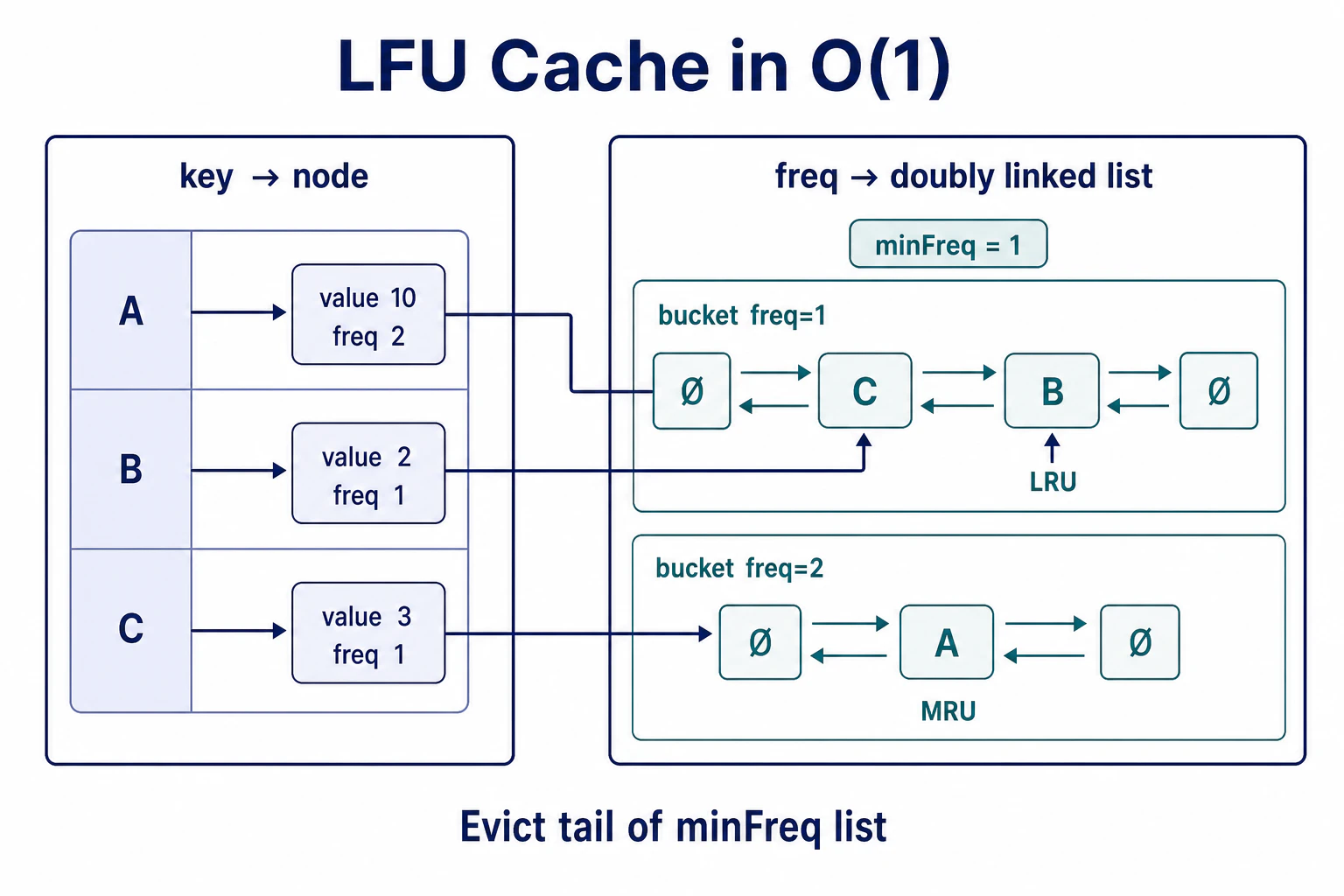
定数時間にするには、マップを2枚持つのが最短です。
| 役割 | 構造 |
|---|---|
| キーからノードへ行く | Map<K, Node> |
| 同じ頻度の順序を保つ | Map<number, 双方向リスト> |
| 捨てるバケットを指す | minFreq |
ヒープは使いません。捨てる対象は、常に freq.get(minFreq) の末尾です。
LRU との差
LRU は「最近使った順」だけです。リストが1本あれば足ります。
LFU は「使った回数」が先です。回数が同じときだけ、最近使った順で決めます。全キーの頻度が 1 のあいだは、LFU は LRU と同じ動きになります。
LeetCode 460 の仕様もこれです。get も put の更新も、どちらも使用回数に数えます。
問題設定
容量 capacity のキャッシュを作ります。
const cache = new LFUCache<number, number>(2);
cache.put(1, 1); // {1: freq1}
cache.put(2, 2); // {1: freq1, 2: freq1}
cache.get(1);    // 1 の頻度が 2 になる
cache.put(3, 3); // 頻度1の 2 を捨てる
返す API は LRU と同じです。
get(key): value | undefined
put(key, value): void
見つからない get は undefined です。使用回数は増やしません。
不変条件
コードを書く前に、次の4つだけ決めます。壊れた実装のほとんどは、このどれかを破っています。
-
mapにあるノードは、必ずどれか1つの頻度リストに属する - 各頻度リストの
head.nextが most recent、tail.prevが least recent -
minFreqは、いまキャッシュに残っている最小頻度を指す - 新規キーの頻度は必ず 1。入れた直後の
minFreqは 1
番兵ノードを置く理由は LRU と同じです。空リスト、先頭、末尾の分岐を消すためです。
TypeScript 実装
type LfuNode<K, V> = {
  key?: K;
  value?: V;
  freq: number;
  prev: LfuNode<K, V> | null;
  next: LfuNode<K, V> | null;
};

class FreqList<K, V> {
  private readonly head: LfuNode<K, V> = { freq: 0, prev: null, next: null };
  private readonly tail: LfuNode<K, V> = { freq: 0, prev: null, next: null };
  size = 0;

  constructor() {
    this.head.next = this.tail;
    this.tail.prev = this.head;
  }

  get empty(): boolean {
    return this.size === 0;
  }

  addToFront(node: LfuNode<K, V>): void {
    const first = this.head.next;
    if (!first) throw new Error("broken list: head.next is missing");
    node.prev = this.head;
    node.next = first;
    first.prev = node;
    this.head.next = node;
    this.size++;
  }

  remove(node: LfuNode<K, V>): void {
    if (!node.prev || !node.next) {
      throw new Error("broken list: node is detached");
    }
    node.prev.next = node.next;
    node.next.prev = node.prev;
    node.prev = null;
    node.next = null;
    this.size--;
  }

  popLeastRecent(): LfuNode<K, V> {
    const lru = this.tail.prev;
    if (!lru || lru === this.head || lru.key === undefined) {
      throw new Error("broken list: LRU node is missing");
    }
    this.remove(lru);
    return lru;
  }
}

class LFUCache<K, V> {
  private readonly map = new Map<K, LfuNode<K, V>>();
  private readonly freq = new Map<number, FreqList<K, V>>();
  private minFreq = 0;

  constructor(private readonly capacity: number) {
    if (!Number.isInteger(capacity) || capacity <= 0) {
      throw new RangeError("capacity must be a positive integer");
    }
  }

  get size(): number {
    return this.map.size;
  }

  get(key: K): V | undefined {
    const node = this.map.get(key);
    if (!node) return undefined;
    this.bump(node);
    return node.value;
  }

  put(key: K, value: V): void {
    const existing = this.map.get(key);
    if (existing) {
      existing.value = value;
      this.bump(existing);
      return;
    }

    if (this.map.size === this.capacity) this.evict();

    const node: LfuNode<K, V> = { key, value, freq: 1, prev: null, next: null };
    this.map.set(key, node);
    this.list(1).addToFront(node);
    this.minFreq = 1;
  }

  private list(freq: number): FreqList<K, V> {
    let bucket = this.freq.get(freq);
    if (!bucket) {
      bucket = new FreqList<K, V>();
      this.freq.set(freq, bucket);
    }
    return bucket;
  }

  private bump(node: LfuNode<K, V>): void {
    const from = this.list(node.freq);
    from.remove(node);
    if (from.empty && this.minFreq === node.freq) this.minFreq++;
    node.freq++;
    this.list(node.freq).addToFront(node);
  }

  private evict(): void {
    const bucket = this.freq.get(this.minFreq);
    if (!bucket || bucket.empty) {
      throw new Error("broken cache: minFreq list is empty");
    }
    const victim = bucket.popLeastRecent();
    this.map.delete(victim.key as K);
  }
}
FreqList は「同じ頻度の LRU リスト」です。LFUCache 本体は、キー検索と minFreq の更新だけを担当します。
get で頻度を上げる
get の本体は bump です。既存キーの put も同じ関数を通ります。
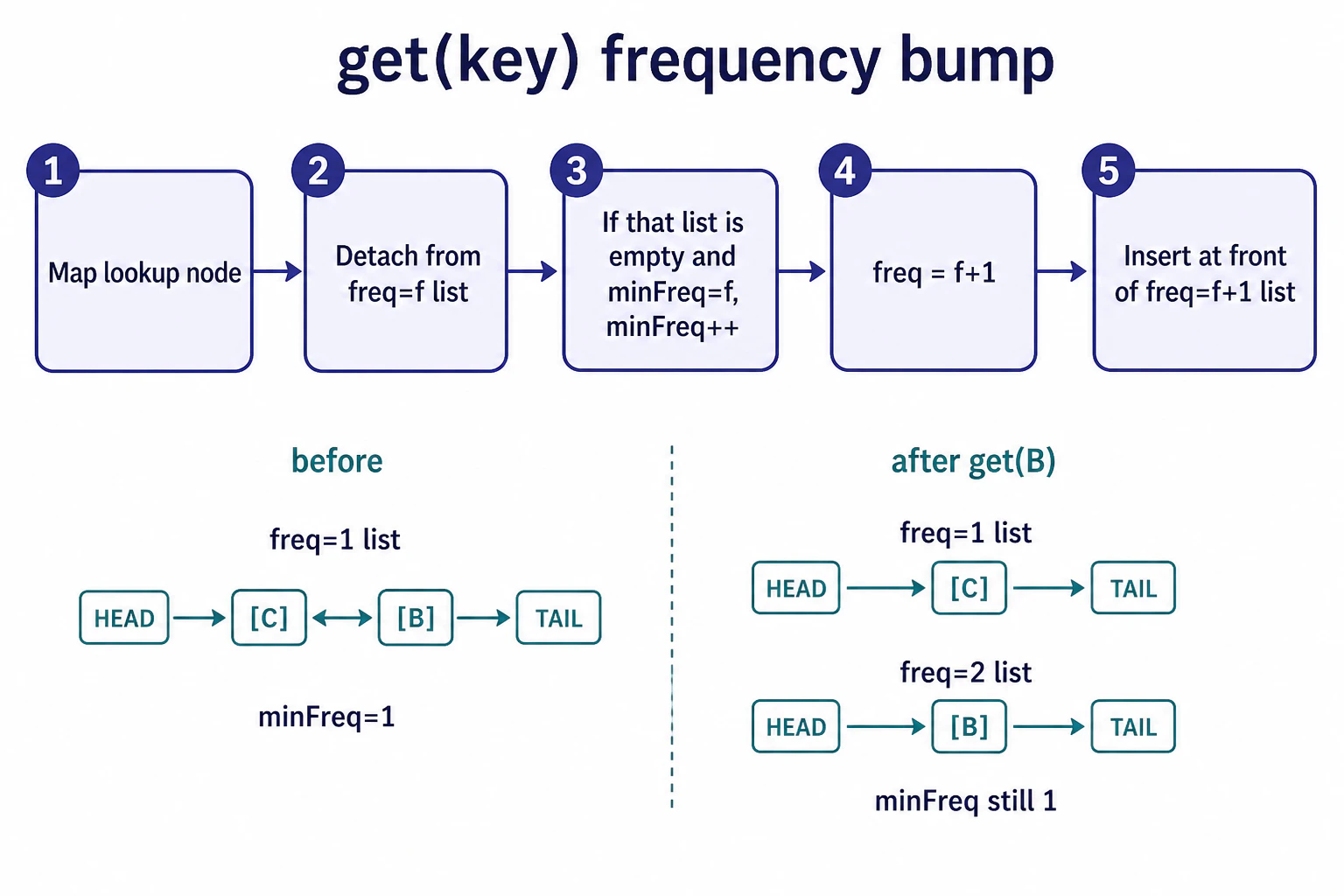
private bump(node: LfuNode<K, V>): void {
  const from = this.list(node.freq);
  from.remove(node);
  if (from.empty && this.minFreq === node.freq) this.minFreq++;
  node.freq++;
  this.list(node.freq).addToFront(node);
}
ここが一番壊れやすいです。
minFreq を上げてよいのは、「いま外したリストが空になった」かつ「その頻度が最小だった」ときだけです。同じ頻度に他のキーが残っているなら、minFreq はそのままです。上の図だと、B を動かしても C が freq=1 に残るので、minFreq は 1 のままです。
新しいキーを入れたあとに minFreq = 1 へ戻すのも、同じ理由です。新規キーの頻度は必ず 1 なので、最小値は 1 に戻ります。
追い出し
満杯のときに新しいキーを入れると、minFreq のリスト末尾を捨てます。
if (this.map.size === this.capacity) this.evict();
走査しません。最小頻度のバケットは変数で指してあり、その中の LRU は tail.prev です。
同頻度の順序は、リストの付け替えだけで決まります。get や更新のたびに先頭へ移しているので、末尾が「その頻度のなかで一番使われていないキー」になります。
LeetCode 460 を手で追う
公式例を、頻度リストの中身まで書きます。左が most recent です。
put(1,1)  freq1: 1                 minFreq=1
put(2,2)  freq1: 2 - 1             minFreq=1
get(1)    freq1: 2
          freq2: 1                 minFreq=1
put(3,3)  freq1 の末尾 2 を捨てる
          freq1: 3
          freq2: 1                 minFreq=1
get(3)    freq2: 3 - 1             minFreq=2
put(4,4)  同頻度なので LRU の 1 を捨てる
          freq1: 4
          freq2: 3                 minFreq=1
put(4,4) の直前、1 と 3 はどちらも頻度 2 です。3 のほうが後から触っているので、捨てるのは 1 です。
動かして確認する
const cache = new LFUCache<number, number>(2);
cache.put(1, 1);
cache.put(2, 2);
console.log(cache.get(1)); // 1

cache.put(3, 3);
console.log(cache.get(2)); // undefined
console.log(cache.get(3)); // 3

cache.put(4, 4);
console.log(cache.get(1)); // undefined
console.log(cache.get(3)); // 3
console.log(cache.get(4)); // 4
同頻度の追い出しと、容量 1 も別ケースにします。
const tie = new LFUCache<string, number>(2);
tie.put("A", 1);
tie.put("B", 2);
tie.put("C", 3);
console.log(tie.get("A")); // undefined
console.log(tie.get("B")); // 2

const cap1 = new LFUCache<string, number>(1);
cap1.put("A", 1);
cap1.put("B", 2);
console.log(cap1.get("A")); // undefined
console.log(cap1.get("B")); // 2
Bun なら、クラス定義と同じファイルに置いて実行できます。
bun lfu-cache.ts
計算量
| 操作 | 時間 | 理由 |
|---|---|---|
get |
平均 O(1)
|
Map 検索 + リストの付け替え |
put 更新 |
平均 O(1)
|
値の上書き + bump
|
put 新規 |
平均 O(1)
|
必要なら末尾削除 + freq=1 へ挿入 |
| 空間 | O(capacity) |
ノードと、高々 capacity 本の頻度リスト |
JavaScript の Map は平均 O(1) として話します。面接では「平均」と添えると正確です。
ヒープ版は実装が短いですが、put / get が O(log n) になります。定数時間が条件なら、この2枚マップのほうが説明しやすいです。
よくあるバグ
minFreq を走査で求め直す
空になったバケットを見たあと、1 から数え直す実装をときどき見ます。それだと追い出しが O(n) に戻ります。空になった瞬間に minFreq++ すれば足ります。頻度は 1 ずつしか増えないからです。
新規 put のあと minFreq を戻し忘れる
キャッシュ内のキーが全部頻度 3 になっていても、新しいキーは頻度 1 です。ここで minFreq を 1 に戻さないと、次の追い出しが頻度 3 側を切ってしまいます。
ヒットなのにリストを動かさない
LFU の同頻度タイブレークは LRU です。get で先頭へ移さないと、よく読んでいるキーが誤って捨てられます。LRU 単体と同じ罠です。
map だけ消してリストに残す
evict はリストから外したあと、必ず map.delete します。片方だけ更新すると、次の get が切り離されたノードを触ります。
面接で先に話す順番
コードより先に、この順で口に出すと通りやすいです。
- キー検索は HashMap
- 頻度ごとの順序は双方向リスト
- 捨てるバケットは
minFreq - 同頻度はリスト末尾が LRU
- 頻度は 1 ずつしか増えないので、空になったら
minFreq++で足りる
これが見えていれば、実装中にポインタで少し詰めても、設計は追ってもらえます。
容量 0 は仕様によって戻り値が違います。LeetCode は capacity = 0 を許しますが、ここでは正の整数に限定しています。問題文を先に確認してください。