
In commercial embedded development, the processor with the highest clock speed rarely wins. What actually determines platform choice is far more practical: how smoothly the hardware moves from engineering sample to mass production.
For industrial and semi-industrial devices, teams care about:
- Stable display initialization and long-term uptime
- Controlled thermal behavior inside sealed enclosures
- Reliable connectivity and storage
- A supply chain that won’t disappear mid-lifecycle
This is why the Rockchip RK3566 continues to appear in a wide range of embedded single-board computer projects. Not because it is extreme, but because it is dependable.
Below is a practical breakdown of why engineering teams repeatedly land on RK3566 when building real products.
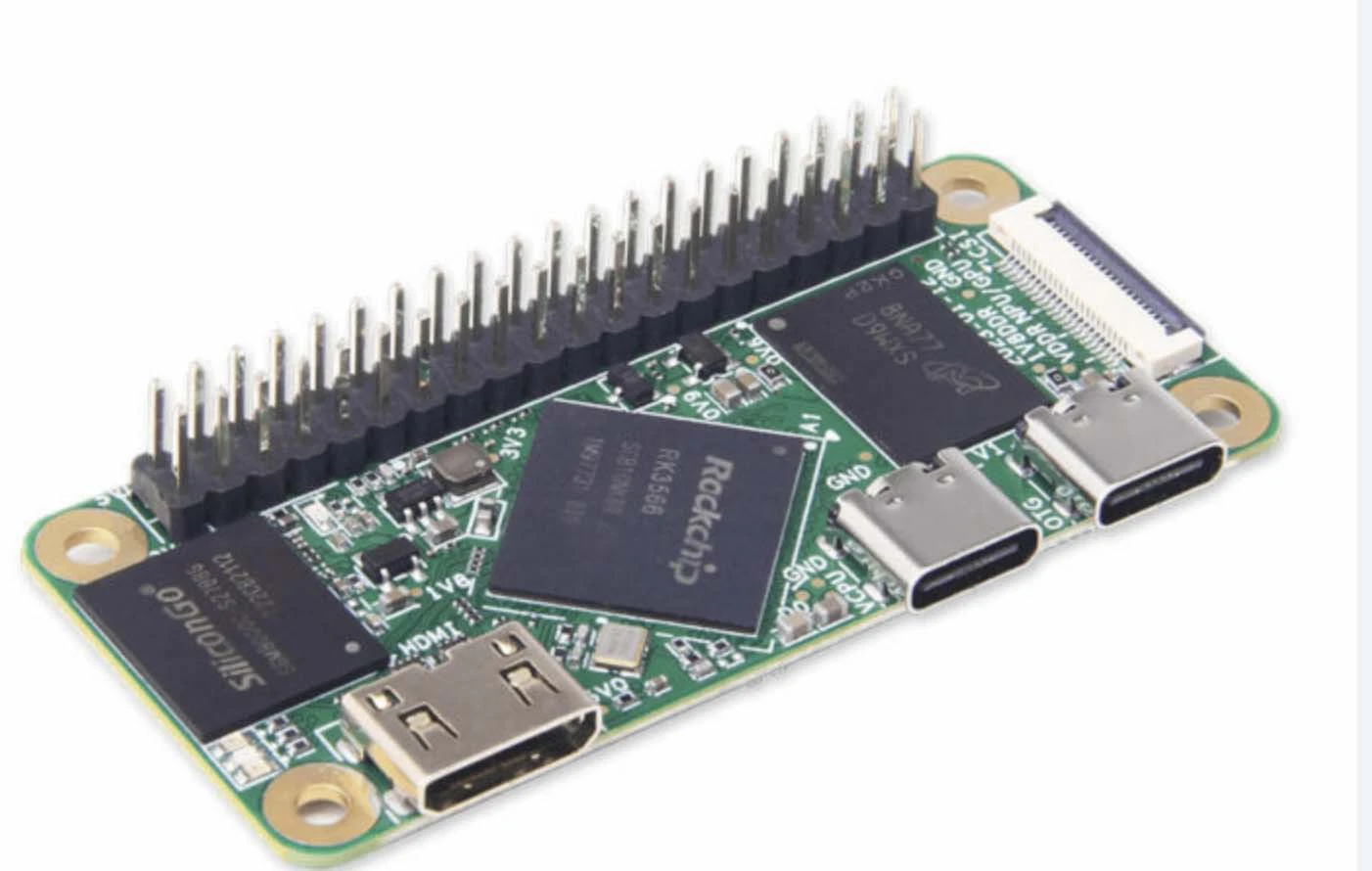
Performance That Matches Embedded Reality
Most embedded systems are not computational workstations. They are purpose-built machines designed to perform a defined set of tasks consistently over long periods.
Typical workloads include:
- Touch-driven graphical interfaces
- Background network services
- Local database access
- Device communication and protocol handling
- Hardware-accelerated video playback
In these contexts, sustained responsiveness matters more than peak throughput. RK3566 provides enough CPU and GPU capability to maintain smooth UI interaction without forcing aggressive power budgets or complex thermal mitigation strategies.
This balance reduces overdesign. You get modern UI capability without paying for unused performance headroom.
Designed for Display-Centric Products
A large percentage of embedded projects built on RK3566 revolve around screens. In many industrial applications, the display defines the product experience.
Common implementations involve TFT LCD panels in 5-inch, 7-inch, or 10-inch classes used for:
- Operator interfaces in industrial control
- Building automation terminals
- Access control and smart entry systems
- Retail kiosks and ticketing machines
- Monitoring dashboards
The SoC’s integrated display pipeline supports typical embedded display interfaces and timing configurations without requiring external graphics hardware. Fewer components mean:
- Simplified PCB routing
- Lower EMI exposure
- Reduced BOM complexity
- Easier compliance testing
When the display is the product, predictable graphics integration becomes a major advantage.
I/O That Matches Industrial Wiring Patterns
Embedded systems rarely operate alone. They communicate with sensors, subcontrollers, field buses, and peripheral modules.
RK3566-based boards typically expose interfaces aligned with common industrial requirements:
- Ethernet for network connectivity and gateways
- USB for device expansion and maintenance
- UART for MCU communication and diagnostics
- I2C and SPI for touch panels and peripheral devices
- GPIO for hardware control signals
- eMMC or SD storage options
This interface mix aligns well with typical industrial wiring schemes. Designers can implement machine connectivity without unusual bridge chips or custom interface layers.
Standard interfaces reduce integration friction and firmware complexity.
Flexible Software Strategy
One hardware base supporting multiple software directions simplifies product planning.
RK3566 supports both Android and Linux environments, covering most embedded use cases.
Android-based systems are commonly selected when:
- The product relies on a rich graphical UI
- Rapid application-layer development is required
- Multimedia capability is important
Linux-based systems are typically chosen when:
- The system is service-heavy or control-oriented
- Long lifecycle maintenance is a priority
- A lean and tightly controlled software footprint is desired
This flexibility enables manufacturers to build multiple product tiers on a shared hardware platform, reducing engineering overhead and inventory fragmentation.
Thermal Characteristics Suitable for Fanless Designs
Industrial deployments often require sealed housings. Dust, vibration, and reliability constraints make active cooling undesirable.
In these environments, thermal management must be predictable.
RK3566 is widely adopted in fanless designs because it can maintain stable operation with properly engineered heatsinking and enclosure airflow paths. That translates to:
- Lower risk of thermal throttling
- Reduced unexpected resets
- Improved long-duration stability
- Better resilience in high-ambient installations
When devices operate continuously in factories or public spaces, thermal predictability directly impacts service cost and reputation.
A Mature and Widely Used Platform
Platform maturity influences engineering risk as much as specifications do.
Because RK3566 has broad market adoption, developers benefit from:
- Established board designs
- Documented device tree configurations
- Proven display and touch combinations
- Community and vendor troubleshooting experience
Mature ecosystems reduce debugging cycles and help avoid last-minute integration surprises.
In embedded development, eliminating unknowns often matters more than chasing cutting-edge features.
Where RK3566 Is Typically the Right Fit
RK3566 is best suited for products requiring modern interfaces and dependable connectivity, but not advanced AI acceleration or high-end 3D graphics workloads.
Frequent deployment categories include:
- Industrial HMI panels
- Smart building controllers
- Laboratory and medical UI terminals (non-diagnostic)
- Self-service retail machines
- Industrial IoT visualization gateways
These applications value stability, lifecycle longevity, and predictable behavior over peak benchmark metrics.
Critical Validation Before Production
Regardless of platform choice, validation determines success. Engineering teams should thoroughly evaluate:
- Display timing stability and resume behavior
- Backlight control reliability
- Touch calibration under electrical noise
- Storage endurance and update mechanisms
- OTA reliability and rollback capability
- Worst-case thermal stress scenarios
- Long-term BSP maintenance planning
Addressing these factors early prevents costly post-deployment corrections.
Closing Thoughts
RK3566 continues to be selected across embedded SBC designs not because it dominates specification charts, but because it aligns with product reality.
It offers adequate performance for modern graphical systems, supports fanless hardware strategies, and benefits from an ecosystem mature enough to reduce engineering uncertainty.
In industrial product development, predictable integration and long-term reliability outweigh synthetic performance numbers. RK3566 succeeds because it meets those priorities consistently.